Why Retinol Isn’t for Everyone (And How to Know If It’s Right for You)
Retinol is often described as the gold standard of skincare.
It’s praised for smoothing fine lines, improving texture, and supporting long-term skin renewal.
Because of this, many people feel that retinol is something they must use — otherwise their skincare routine is incomplete.
But the truth is much simpler and more reassuring:
Retinol is not essential for everyone.
And your skin is not “behind” if you don’t use it.
Skincare works best when it supports your skin, not when it overwhelms it.
- Retinol isn’t mandatory for healthy skin
- Skin tolerance matters more than trends
- Irritation is not something to push through
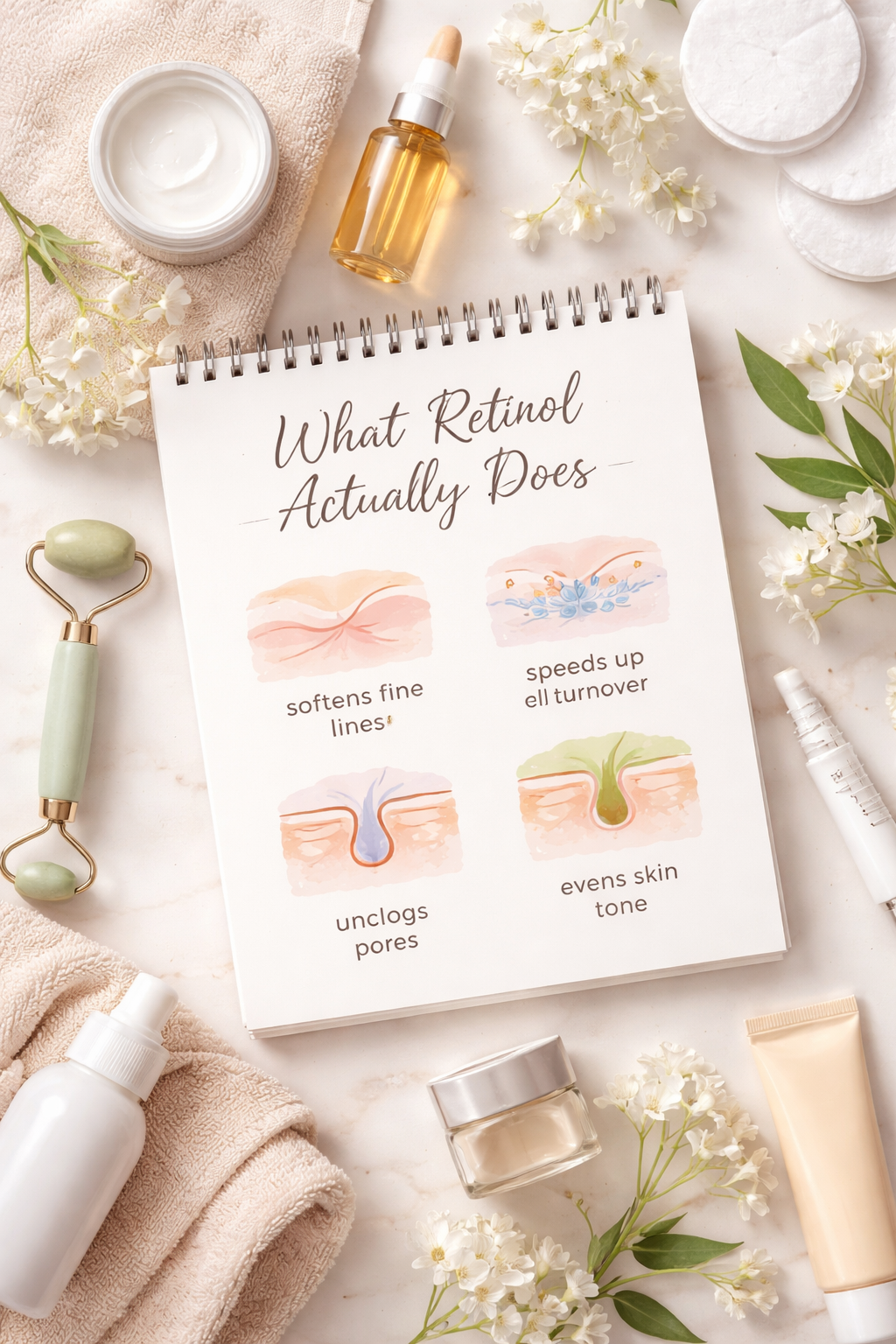
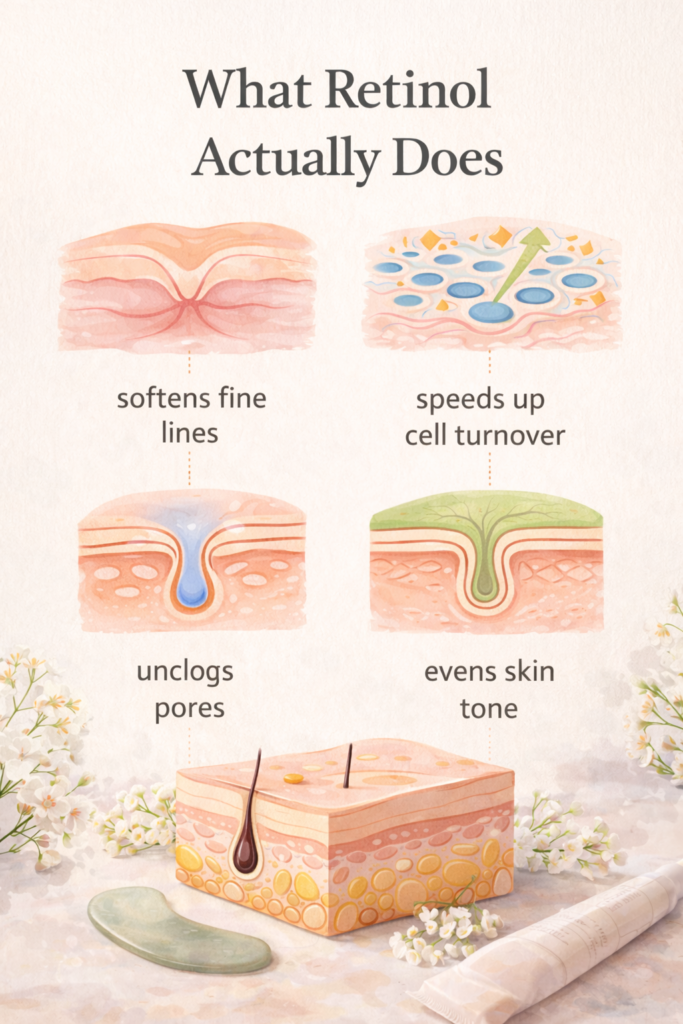
What Retinol Actually Does
Retinol is a form of vitamin A.
Its main role is to speed up skin cell turnover and support collagen production.
Over time, this process may help:
- soften fine lines
- improve uneven texture
- unclog pores
- even out skin tone
However, this increased cell turnover is also the reason retinol can feel irritating at first — especially if the skin barrier is not strong.
Why Retinol Isn’t for Everyone
Every skin barrier is different.
Some people adapt to retinol easily and see visible improvements.
Others experience redness, flaking, or breakouts that don’t improve — even after weeks.
This doesn’t mean retinol is a “bad” ingredient.
It simply means not all skin types tolerate strong actives the same way.
Retinol may not be the best choice if you:
- have very sensitive or reactive skin
- already struggle with dryness or irritation
- use multiple strong actives at the same time
- increase frequency too quickly
Healthy skin should feel calm and supported — not constantly inflamed.
Purging vs. Irritation: How to Tell the Difference
This is one of the most misunderstood parts of retinol use.
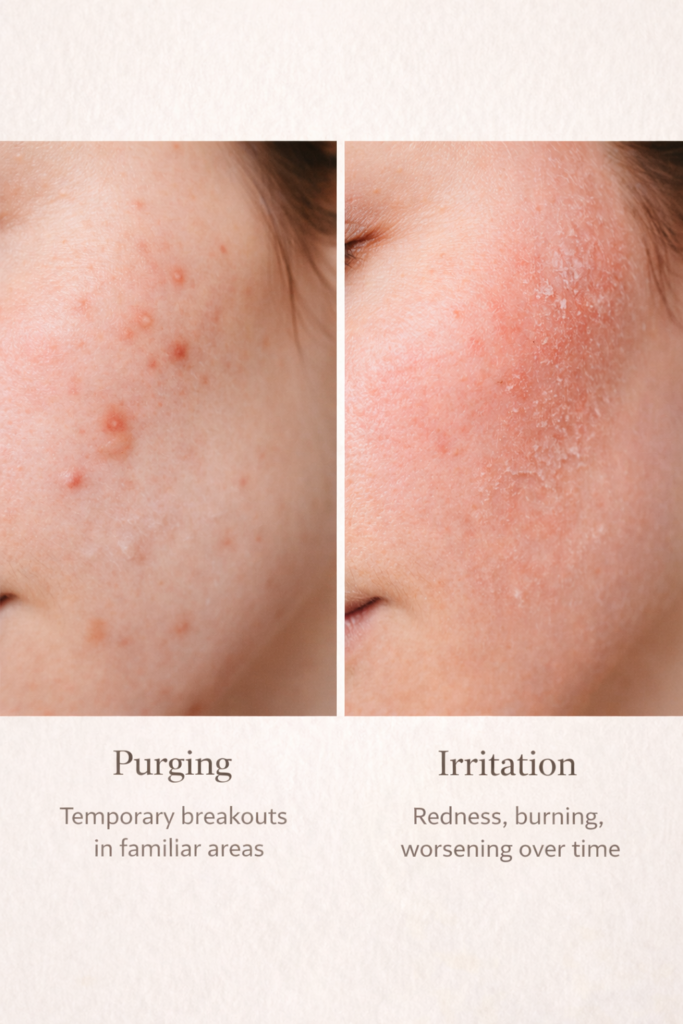
Retinol purging
Purging happens because cell turnover speeds up.
It usually:
- appears where you normally break out
- is temporary
- improves within 4–6 weeks
Retinol irritation
Irritation feels different and should not be ignored.
Signs include:
- burning or stinging
- redness and inflammation
- flaking combined with tightness
- breakouts in unusual areas
- symptoms that worsen over time
Important. If you skin keeps getting worse, it’s irritation- not purging.
How to Tell If Your Skin Tolerates Retinol
✔ Retinol may work for you if:
- dryness is mild and manageable
- redness fades between uses
- your skin barrier feels stable
- sensitivity does not increase over time
✖ Retinol may not be right if:
- irritation lasts longer than a few weeks
- your skin feels constantly tight or inflamed
- breakouts worsen instead of calming down
- overall sensitivity increases
Tolerance is about balance — not pushing through discomfort.
How to use Retinol More Gently (If you Choose to Try)
If you decide to try retinol, how you introduce it matters more than the product itself.
A skin-friendly approach:
- start with a low concentration
- use it once a week at first, then slowly increase
- apply only to clean, dry skin
- keep the rest of your routine simple
- moisturize generously
- always use sunscreen the next morning
Many people tolerate retinol better when it’s applied after moisturizer in the beginning.
This doesn’t make it ineffective — it makes it gentler.
How Long Does Retinol Take to work?
Retinol is not a quick fix.
Visible improvements often take:
- 8–12 weeks for texture and tone
- longer for fine lines
If results don’t appear immediately, that doesn’t mean it isn’t working.
Consistency and patience matter more than frequency.
Do you Actually Need Retinol for Anti-Aging?
No single ingredient is required for healthy skin aging.
Strong foundations matter most:
- daily sun protection
- hydration
- a resilient skin barrier
- gentle, consistent routines
Retinol can support these goals — but it is one option, not an obligation.
Final Thoughts: Listen to Your Skin.
Retinol is powerful, but power does not equal necessity.
If your skin tolerates retinol, it can be a valuable long-term tool.
If it doesn’t, your skin is not failing — it’s communicating.
The best skincare routine is the one your skin can handle long-term.
If you’re building a gentle, effective routine:
Read next: How to Layer Your Skincare Correctly (AM & PM Routine Guide)