Yoga for Women’s Inflammation: 7 Gentle Poses to Calm Stress & Support Hormonal Balance
Have you ever felt like you’re doing everything right — eating healthy, taking supplements, trying to rest — and your body still feels inflamed, tired, or overwhelmed?
I’ve seen this happen so often with women.
We push through stress. We ignore subtle symptoms. We normalize bloating, PMS, skin flare-ups, brain fog, and exhaustion. And then we wonder why our body feels constantly “on edge.”
Inflammation in women isn’t always just about food.
Very often, it’s about stress.
When your nervous system stays in fight-or-flight mode for too long, cortisol rises. And over time, that stress response may quietly fuel inflammation in the body — affecting hormones, digestion, skin, and energy levels.
The answer isn’t always doing more.
Sometimes, it’s about slowing down.
Gentle, breath-focused yoga can help shift your body into a calmer state — one where healing and regulation become possible again.
In this guide, I’ll walk you through 7 simple, grounding poses that may help support your body’s natural anti-inflammatory response — especially during stressful seasons.
Let’s start by understanding what’s really happening inside your body.
My Personal Journey With Inflammation
For me, inflammation isn’t just a wellness trend or a buzzword.
I live with endometriosis.
And if you know anything about it, you know it forces you to pay attention to your body in a way you might never have before. The pain, the fatigue, the flare-ups — they teach you very quickly that stress, hormones, and inflammation are deeply connected.
I didn’t choose this journey. But I had to learn how to live differently because of it.
I had to learn how to eat in a way that supports my body.
How to move gently instead of pushing through pain.
How to calm my nervous system instead of constantly operating in survival mode.
That’s actually why this blog exists.
Not because I have everything figured out — but because I know how overwhelming it can feel when your body seems to be working against you. If sharing what has helped me can support even one woman in feeling less alone, it’s worth it.
Yoga became part of that healing rhythm for me.
Not intense flows. Not sweaty workouts.
Gentle, grounding movements. Slow breathing. Poses that felt safe.
Over time, I started to notice something important: when my nervous system felt calmer, my flare-ups felt more manageable. My body felt less reactive.
And while yoga is not a cure for endometriosis — or any inflammatory condition — it can be a powerful support tool.
Let’s talk about why that happens.
Why Gentle Yoga May Help Support Inflammation in Women
Chronic inflammation in women is often closely tied to stress and hormonal imbalance.
When we’re under constant pressure — emotionally, physically, or mentally — our cortisol levels stay elevated. Over time, this can:
- Disrupt hormone signaling
- Affect gut health
- Increase systemic inflammation
- Worsen PMS or inflammatory conditions
- Contribute to fatigue and mood shifts
Gentle yoga works differently than high-intensity exercise.
Instead of stimulating stress hormones, slow and breath-focused movement activates the parasympathetic nervous system — also known as the “rest and digest” state.
This shift may help:
- Lower cortisol
- Improve circulation
- Support lymphatic drainage
- Encourage hormonal balance
It’s not about burning calories.
It’s about signaling safety to the body.
And when the body feels safe, it regulates better.
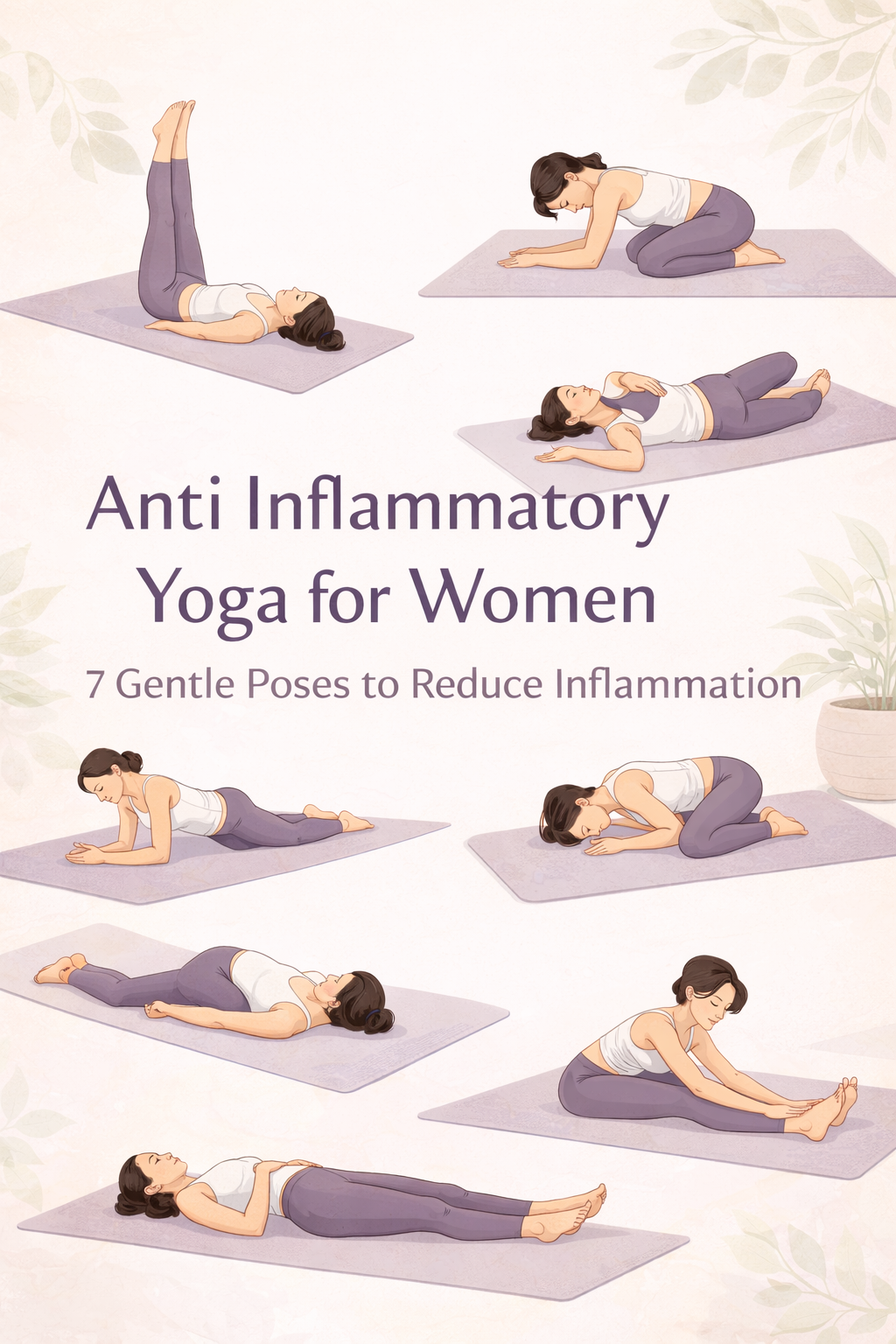
7 Gentle Yoga Poses That May Help Support Your Body During Inflammatory Flare-Ups
These poses are not about pushing your limits.
They’re about creating safety in the body.
Move slowly. Breathe deeply. And listen to how you feel.
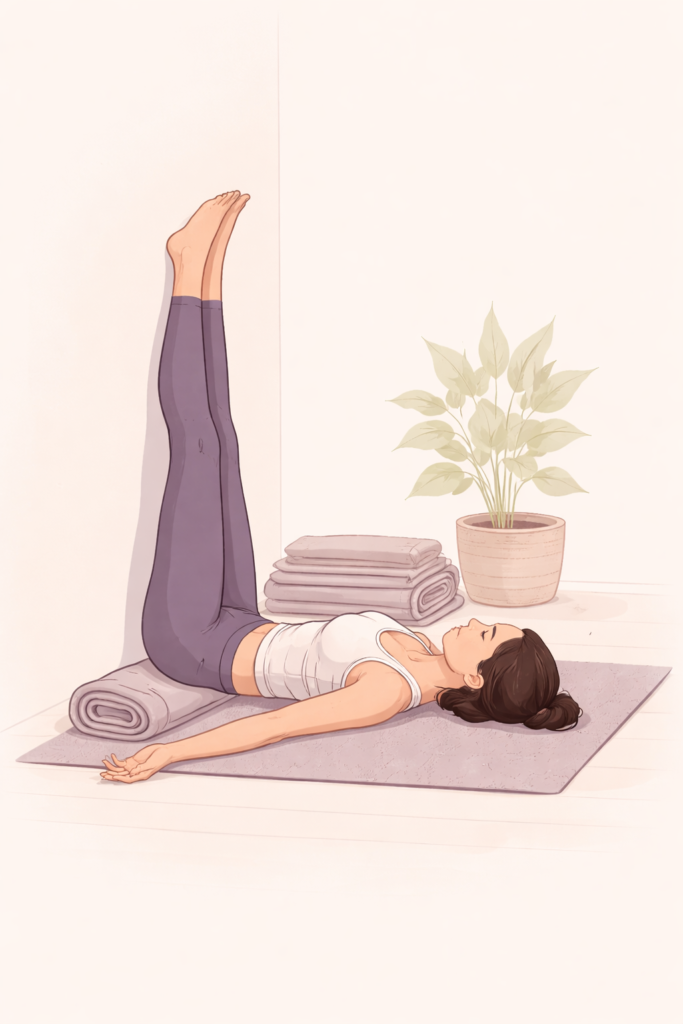
1. Legs Up the Wall (Viparita Karani)
Hold: 5 minutes
If there’s one pose I return to again and again during flare-ups, it’s this one.
Lie on your back and bring your legs up against a wall. Let your arms rest by your sides, palms facing up.
Why it may help:
- Encourages lymphatic circulation
- Reduces swelling and heaviness
- Calms the nervous system
- Supports recovery after long, stressful days
This pose gently tells your body: you’re safe now.
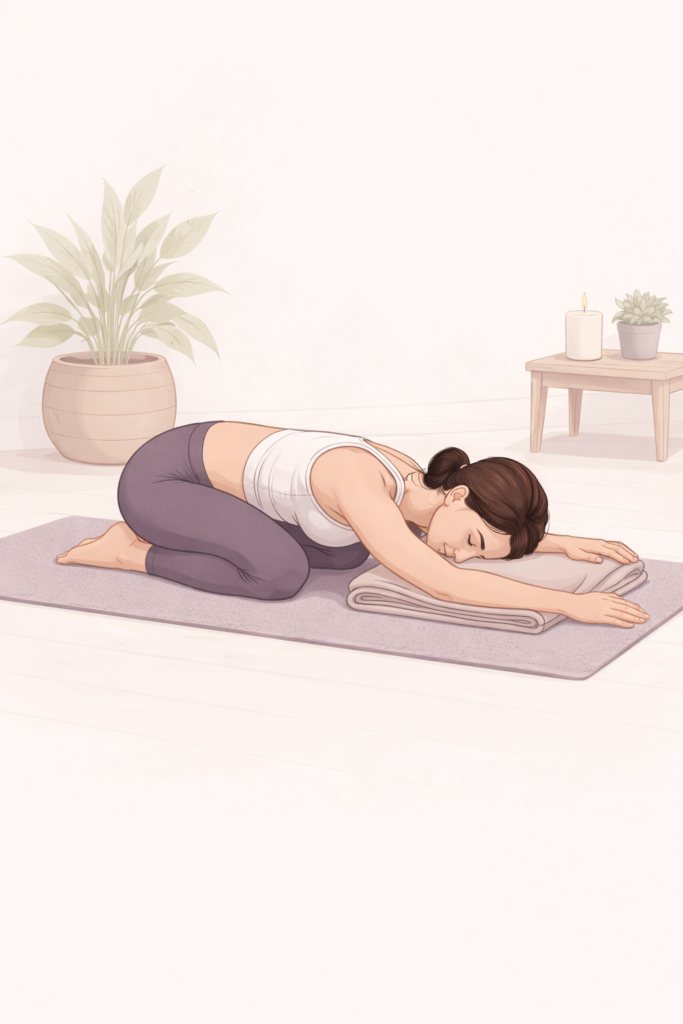
2. Child’s Pose (Balasana)
Hold: 3–5 minutes
Kneel down, bring your big toes together, and fold forward. Rest your forehead on the mat.
There’s something deeply comforting about this shape.
Why it may help:
- Activates the parasympathetic nervous system
- Lowers stress response
- Releases lower back tension
- Supports hormonal regulation
Especially helpful during PMS or emotional overwhelm.
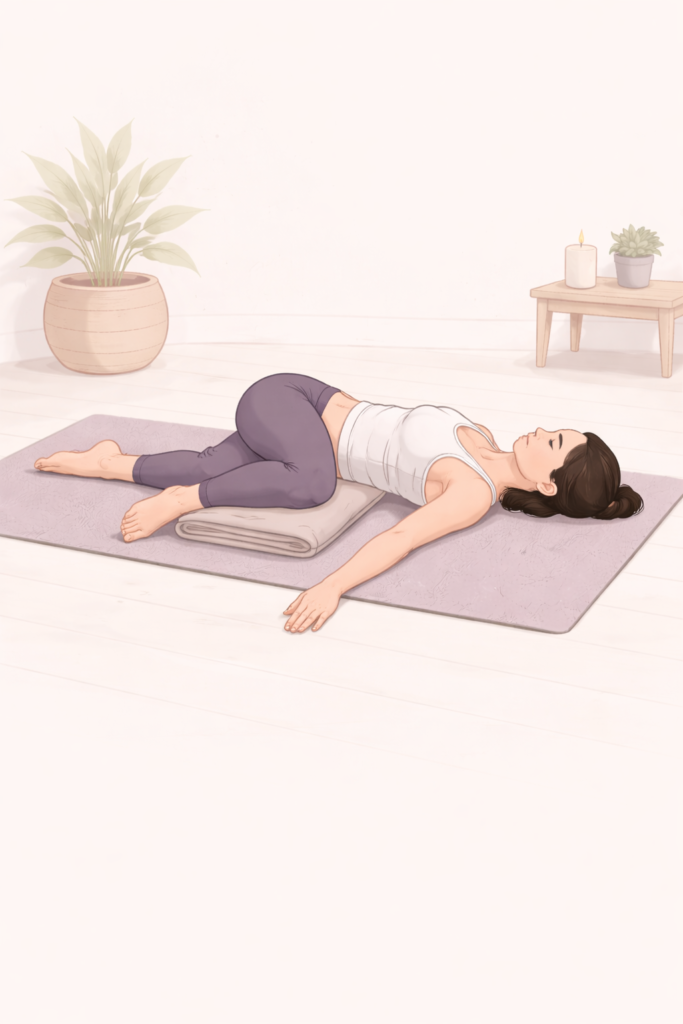
3. Supine Spinal Twist
Hold: 2–3 minutes per side
Lie on your back, hug one knee in, and gently guide it across your body.
Twists stimulate digestion and gently massage the abdominal area.
Why it may help:
- Supports gut motility
- May reduce bloating
- Encourages detoxification pathways
- Relieves tension stored in the torso
Move slowly. There’s no need to force the stretch.
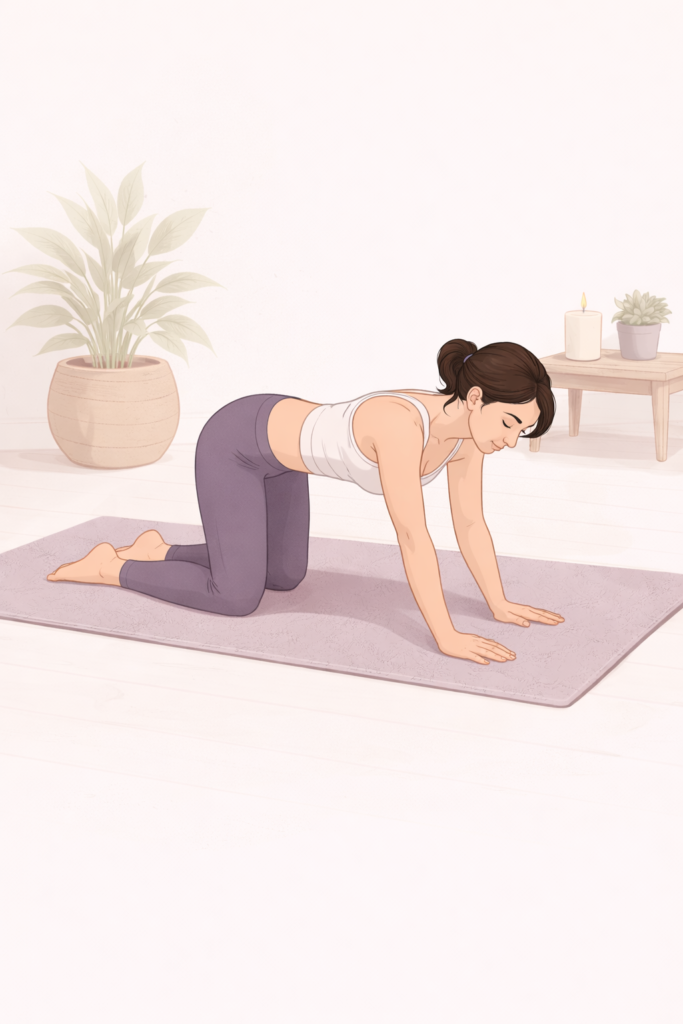
4. Cat–Cow (Gentle Version)
1–2 minutes, slow breathing
On hands and knees, alternate between arching and rounding your spine.
This isn’t about speed — it’s about breath.
Why it may help:
- Improves spinal mobility
- Increases circulation
- Releases stiffness linked to inflammation
- Connects movement with breath
Keep it slow and controlled.
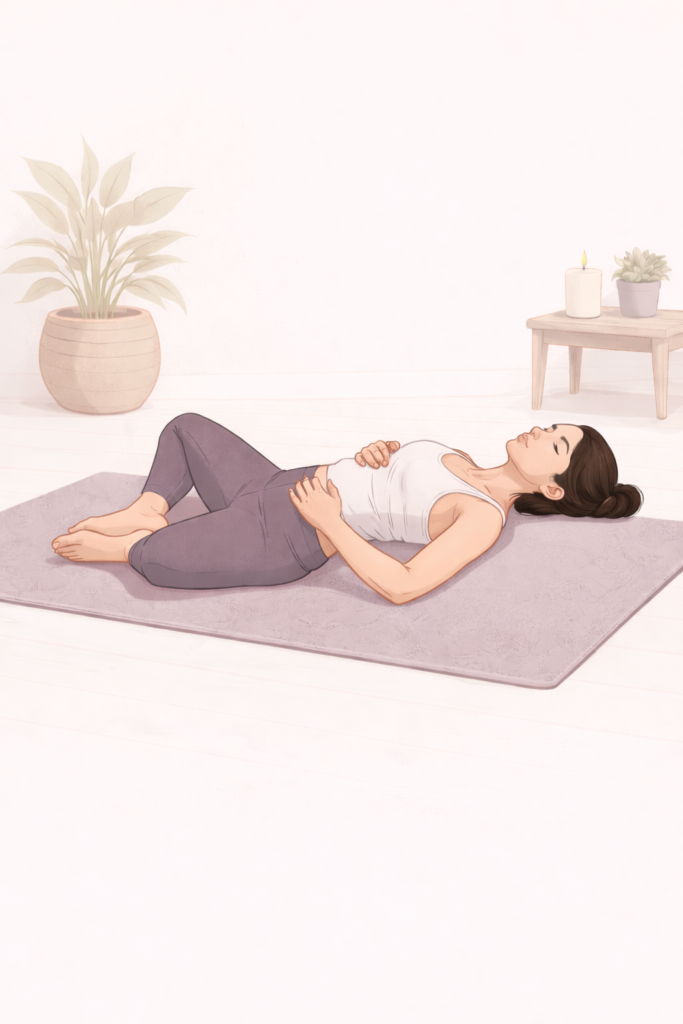
5. Reclined Bound Angle (Supta Baddha Konasana)
Hold: 4–5 minutes
Lie on your back, bring the soles of your feet together, and let your knees fall open.
Place one hand on your belly and one on your heart.
Why it may help:
- Opens the pelvic area gently
- Supports hormonal balance
- Encourages deep diaphragmatic breathing
- Calms emotional stress
This pose can feel especially supportive for women with pelvic tension.
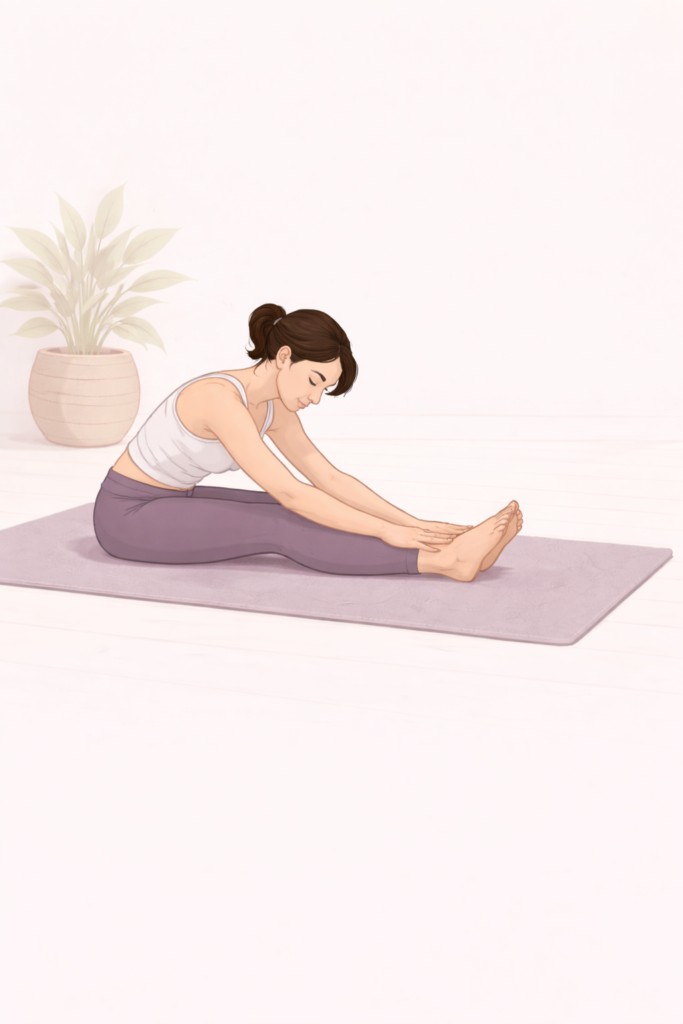
6. Seated Forward Fold (Gentle)
Hold: 3 minutes
Sit with your legs extended and gently fold forward — even a small fold is enough.
Forward folds naturally quiet the nervous system.
Why it may help:
- Reduces mental overstimulation
- Supports parasympathetic activation
- Helps ease inflammatory stress patterns
No need to reach your toes. Just soften
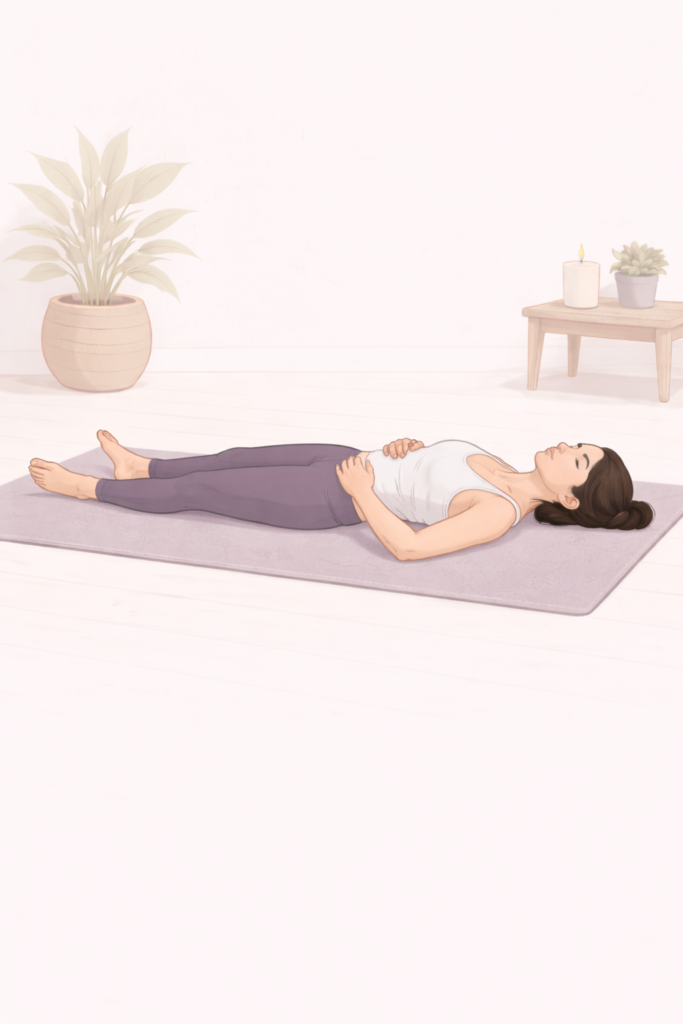
7. Savasana with Deep Belly Breathing
Hold: 5 minutes
Lie flat on your back. Place one hand on your belly.
Inhale slowly through your nose for 4 counts.
Exhale slowly for 6.
Why it may help:
- Lowers cortisol
- Signals safety to the brain
- Reduces systemic stress response
- Supports long-term inflammation management
Sometimes the most powerful pose is simply stillness.
A Simple 15-Minute Anti-Inflammatory Flow
If you’re short on time, try this sequence:
- Cat–Cow – 2 minutes
- Child’s Pose – 3 minutes
- Supine Twist – 2 minutes each side
- Legs Up the Wall – 5 minutes
- Savasana – 3 minutes
Consistency matters more than intensity.
Final Thoughts: Healing Isn’t Always Loud
Living with inflammation — especially as a woman — can feel frustrating, isolating, and unpredictable.
Some days your body cooperates.
Other days it doesn’t.
I’ve learned that healing doesn’t always look dramatic.
Sometimes it looks like five quiet minutes with your legs up the wall.
Sometimes it’s choosing gentler movement instead of pushing harder.
Sometimes it’s simply breathing slower.
Yoga didn’t “fix” my endometriosis.
But it helped me feel more connected to my body instead of fighting it.
And that shift matters.
When we calm the nervous system, we create space for the body to regulate.
When we reduce stress, we support hormone balance.
When we move gently, we allow recovery.
If you’re navigating inflammation, hormone imbalances, or simply feeling overwhelmed — start small.
Consistency will always matter more than intensity.
Your body isn’t broken.
It might just be asking for softness.
A Gentle Reminder
Yoga is a supportive tool — not a medical treatment.
If you’re managing endometriosis or any chronic inflammatory condition, always consult your healthcare provider before starting a new routine.
But know this:
You are not alone in this.
And small, intentional practices can make a difference over time.
Movement is powerful — but it’s only part of the picture.
If reducing inflammation is important to you, nutrition matters too. I’ve written a detailed guide on anti-inflammatory foods for women, with simple ideas you can start using right away.
You can read it here
If you’re navigating inflammation or endometriosis, you’re not alone.
Feel free to share your journey below — this space is here for support.