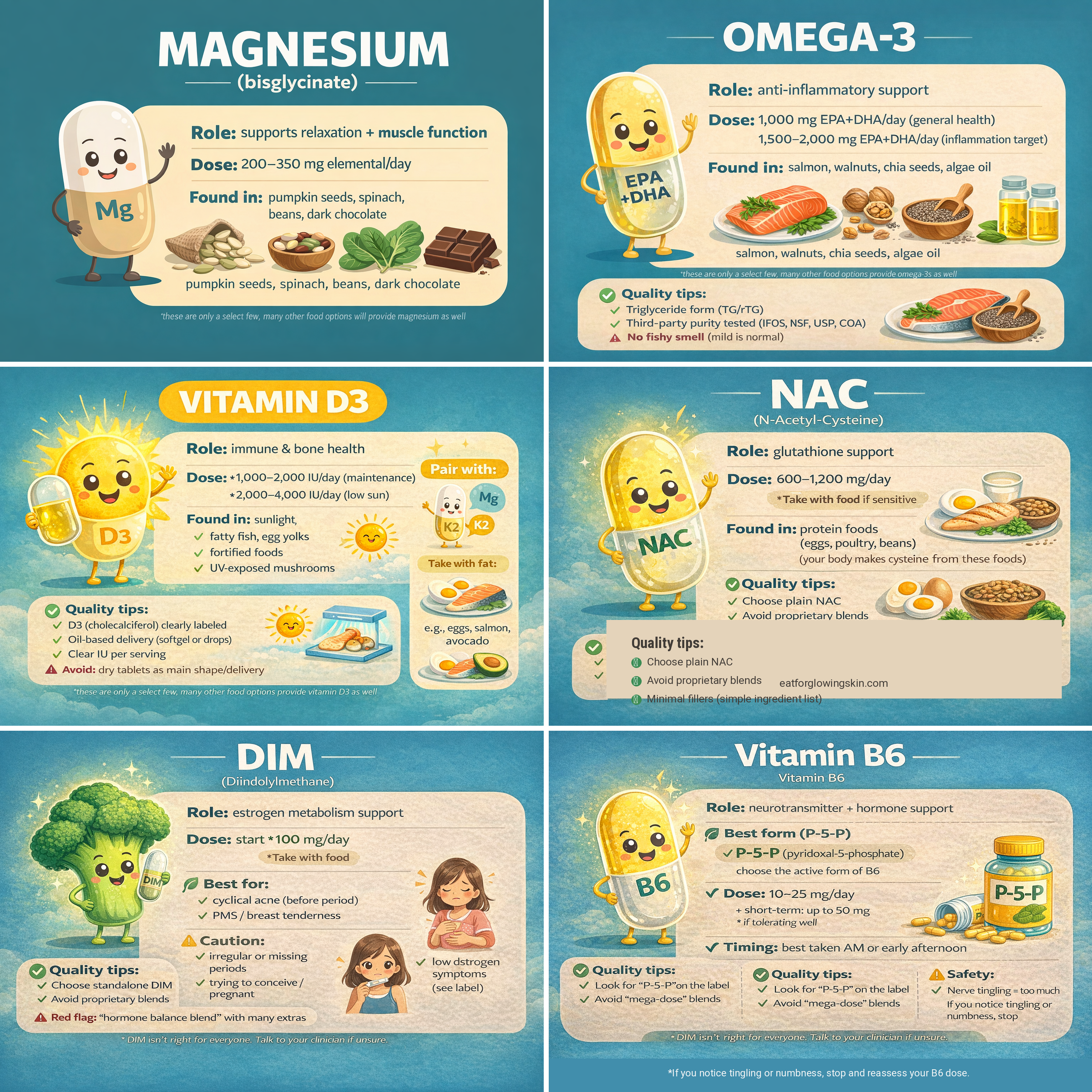
Anti-Inflammatory Supplements for Women: Best Forms, Doses & Quality Guide
If you’re looking for anti-inflammatory supplements for women, it can be surprisingly hard to know where to start. Two products may look similar on the front of the bottle, yet contain very different forms, doses, and quality standards.
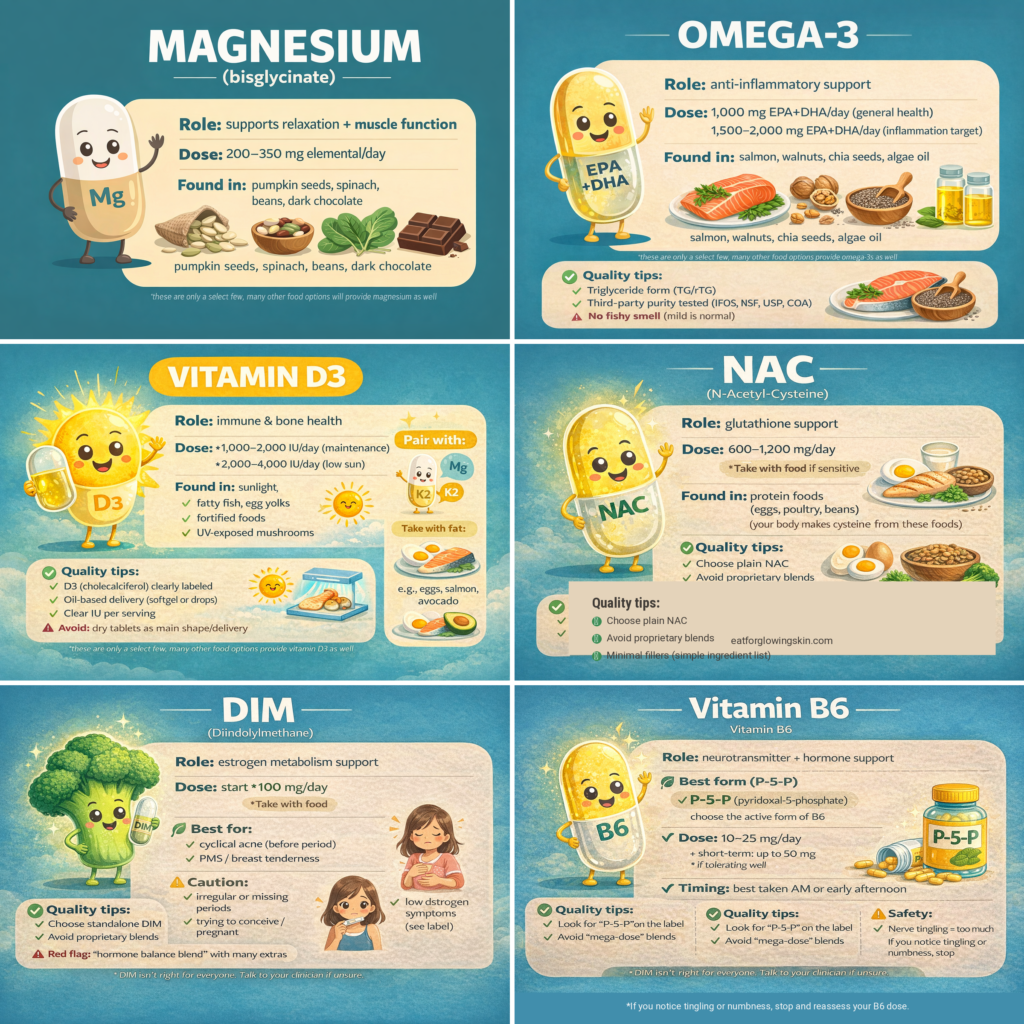
In this guide, I’ll break down the supplements I see work best for women—magnesium bisglycinate, omega-3, vitamin D3, NAC, DIM, and B6—and show you how to choose the best formula, effective dose, and quality markers so you don’t waste money (or accidentally mess with your hormones).
1. Quick answer (for busy women)
Chronic, low-grade inflammation is one of those “quiet” issues that can sit in the background for years—often without a clear cause, and often showing up differently from woman to woman.
Supplements can help… but it’s ridiculously hard to know what’s actually worth buying. The same product name can mean totally different forms, active doses, and quality levels—and that’s exactly why some people feel a real difference while others feel nothing (or even worse).
In this guide, I’ll walk through some of the most commonly used supplements for inflammation support in women — including magnesium bisglycinate, omega-3, vitamin D3, NAC, DIM, and vitamin B6 — and explain what to look for, what to avoid, and how to choose more confidently.
2. How to choose quality supplements (in 60 seconds)
Most supplement disappointments come down to three things: the wrong form, the wrong dose, or low quality. Here’s the simple checklist I use so you can stop guessing and start buying products that actually make sense.
1) Look for the form first (not the brand name)
The form determines absorption and tolerability. Two bottles can say “magnesium” or “B6” on the front and be completely different on the back label.
Rule: if the label doesn’t clearly state the form (e.g., bisglycinate, triglyceride, P-5-P), skip it.
2) Check the active dose (this is where people get tricked)
Marketing loves tiny “feel good” doses. Always read the Supplement Facts and find the number that matters:
- Magnesium: look for elemental magnesium (not just “magnesium glycinate 2,000 mg”)
- Omega-3: look for EPA + DHA grams per day (not “1,000 mg fish oil”)
- Vitamin D: look for IU per serving
Rule: if you can’t quickly identify the active dose, you can’t compare products.
3. Choose testing over hype
Quality isn’t “Instagram pretty packaging.” Quality is: the product contains what it claims, and it’s clean and stable.
Look for one of these:
- third-party testing (USP / NSF / IFOS for fish oil)
- a brand that provides a COA (certificate of analysis) or lot testing
Rule: if omega-3 isn’t tested for oxidation and contaminants, it’s not worth it.
4. Watch the “extras” (fillers, sweeteners, unnecessary herbs)
For women—especially with hormonal symptoms—more ingredients isn’t better. Extra herbs and stimulants can make troubleshooting impossible.
Rule: start with the simplest version first, then layer complexity only if needed.
5. Start low, track changes, and don’t add everything at once
If you change five things at once, you’ll never know what helped (or what caused bloating, headaches, mood swings).
Rule: add one supplement at a time, give it 2–4 weeks, and track 2–3 markers (sleep, PMS, skin, digestion, energy).
Before you spend money on supplements, make sure your foundation is solid. Here’s what to eat daily for lower inflammation: Anti-Inflammatory Foods for Women
The takeaway
A “good” supplement is not the most expensive one—it’s the one with the right form, a real effective dose, and proof of quality. In the next sections, I’ll apply this checklist to each supplement (magnesium bisglycinate, omega-3, vitamin D3, NAC, DIM, B6) so you know exactly what to buy—and what to skip.
Important note:
This article is for educational purposes only and is not medical advice. If you are pregnant, breastfeeding, taking medication, or managing a health condition, speak with a qualified healthcare professional before starting any new supplement.
3. Magnesium bisglycinate: best form, dose & quality
Magnesium isn’t technically a vitamin, but it is one of the most useful anti-inflammatory “foundations” for women—because it supports the systems that quietly drive inflammation: stress response, sleep quality, muscle tension, and blood sugar stability. When those are off, inflammation tends to rise (and PMS, cravings, headaches, and skin flare-ups often follow).
What magnesium bisglycinate is (and why this form is usually the best)
Magnesium bisglycinate is magnesium bound to the amino acid glycine (a chelated form). Compared to cheaper forms, it’s popular because it’s typically:
- gentler on digestion (less likely to cause diarrhea than citrate for many people)
- better tolerated at useful doses
- often feels more calming, because glycine supports relaxation
Best formula to look for on the label:
- “Magnesium bisglycinate” or “magnesium glycinate (chelated)”
- ideally it states “elemental magnesium” per serving
- optional quality marker: TRAACS® / Albion chelated (nice bonus, not mandatory)
Avoid (most of the time):
- magnesium oxide as the main form (often cheap, less effective for many)
- “magnesium blend” where you don’t know how much of each form you’re getting
What it’s most helpful for (especially for women)
Magnesium bisglycinate is a great choice if you deal with:
- stress sensitivity (wired-but-tired feeling)
- sleep trouble (difficulty falling asleep or staying asleep)
- PMS tension (cramps, tight muscles, irritability)
- headaches or neck/shoulder tightness
- constipation (note: citrate can work better for this specific goal, but bisglycinate may still help gently)
Recommended amount (what actually makes sense)
Most women do best in this range:
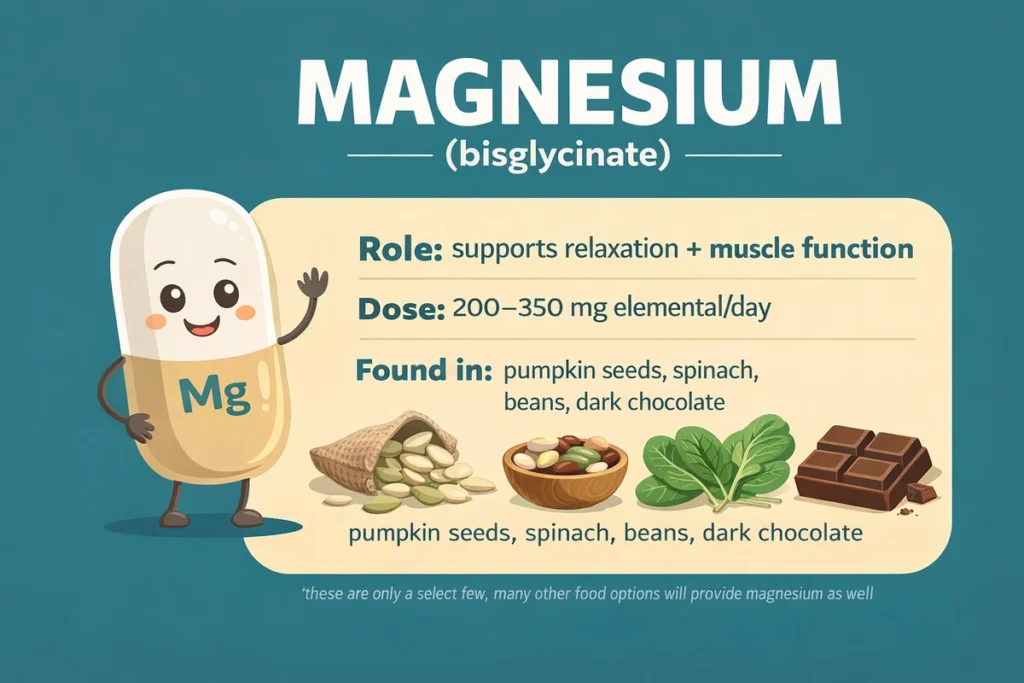
Typical daily range: 200–350 mg elemental magnesium/day
If you’re sensitive or new to magnesium: start with 100–150 mg/day and increase slowly.
Important: Many labels list a big number like “2,000 mg magnesium glycinate,” but what you need is the elemental magnesium amount. Always look for that number.
When to take it (timing that actually works)
Best timing for most women:
- Evening, about 30–90 minutes before bed
Why: it supports relaxation and sleep quality, which is one of the most powerful anti-inflammatory levers.
Benefits you can actually notice
Depending on what your body needs, you may notice:
- deeper sleep and easier wind-down
- fewer “stress spikes” and less muscle tension
- better PMS resilience (less cramping/tension for some)
- fewer cravings tied to stress + poor sleep
- smoother digestion (mild support)
Give it 1–2 weeks for sleep/stress shifts, and 1–2 cycles if you’re tracking PMS changes.
Quick “buying checklist” (non-negotiables)
Before you purchase, confirm:
- it clearly says bisglycinate / glycinate (chelated)
- it lists elemental magnesium per serving
- dosage lands in a realistic range (so you don’t need 8 capsules/day)
- minimal fillers; reputable brand
If you want, I can also write a short “best for / not best for” box under this section (super bloggy), and a one-line transition into the Omega-3 section.
Want a food-first way to get more magnesium too? Try my Anti-Inflammatory Pumpkin Soup—it’s cozy, nourishing, and an easy way to add more magnesium-rich ingredients to your week.
4. Omega-3: best form, EPA vs DHA & dose
Omega-3 is one of the most “worth it” anti-inflammatory supplements—but only if you buy the right form and take a real dose. Most people take one capsule of “1,000 mg fish oil” and feel nothing because the active omega-3 content (EPA + DHA) is often much lower than they think.
What omega-3 is actually doing (why it helps inflammation)
EPA and DHA are fats your body uses to make compounds that help dial down inflammatory signaling and support cell membranes. For women, omega-3 is often a cornerstone for:
- hormone-related inflammation (PMS, breast tenderness patterns, cycle-related mood dips)
- skin barrier + breakouts (especially when inflammation is stress-driven)
- joint comfort and recovery
- brain + mood support (especially with higher EPA)
1) EPA vs DHA: which matters more for inflammation?
Both are useful, but they don’t do the exact same job:
- EPA → often the priority for inflammation + mood + PMS support
- DHA → more strongly associated with brain/eyes and structural roles
Practical rule:
If your goal is inflammation/PMS/mood: choose an omega-3 that’s EPA-forward (more EPA than DHA), or at least not DHA-heavy.
2) Best formula: triglyceride (TG/rTG) vs ethyl ester (EE)
This is the part most labels don’t explain.
Best form to look for:
- Triglyceride (TG) or re-esterified triglyceride (rTG) fish oil
These forms are generally associated with better absorption than ethyl ester products.
If you’re vegan:
- Choose algae oil (it’s typically DHA-heavy; some newer ones include more EPA, but many don’t). For inflammation, if you can find an algae oil with meaningful EPA, that’s ideal.
Label tip:
Sometimes the front just says “fish oil.” Look on the back for wording like triglyceride form / rTG or a reputable brand that states the form clearly.
3) Dose that actually works (what to aim for)
Ignore “fish oil mg” and look for EPA + DHA.
Good target ranges for women
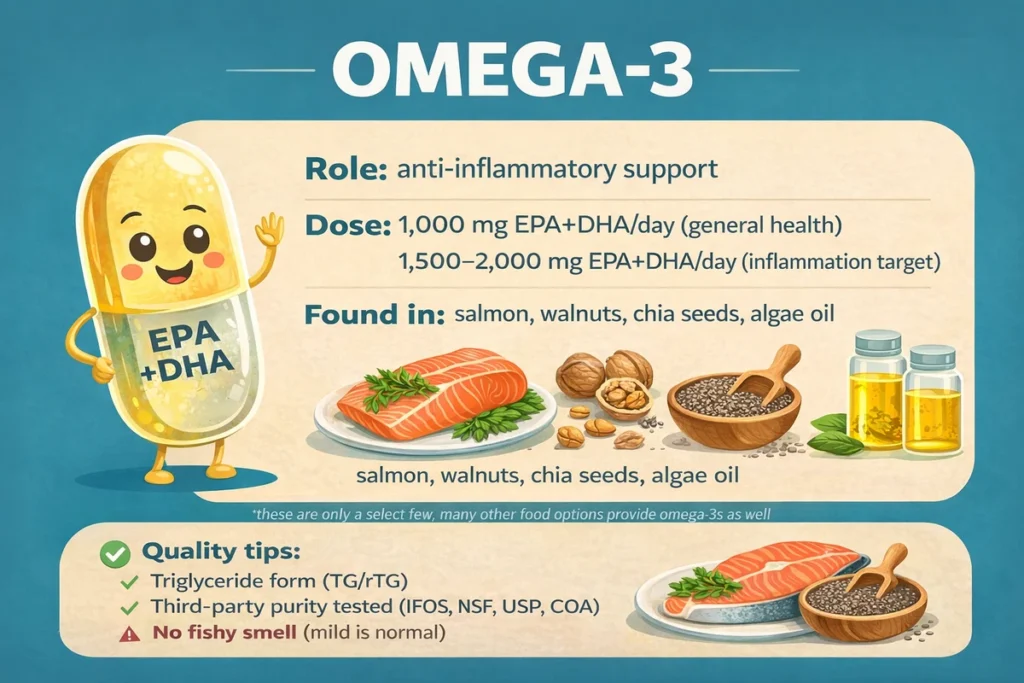
- Maintenance / general health: 1,000 mg per day (EPA + DHA combined)
- Anti-inflammatory target: 1,500–2,000 mg per day (EPA + DHA combined)
That usually means 2–4 capsules per day depending on the product.
How to read the label (quick example)
If one serving gives:
- EPA 400 mg
- DHA 200 mg
Then total EPA+DHA = 600 mg per serving.
To reach 1,800 mg/day you’d need 3 servings.
Takeaway: you’re shopping for EPA+DHA per day, not capsule count.
4) When to take omega-3 (timing that makes sense)
- Take it with a meal that contains fat (better absorption, fewer burps).
- If you take multiple capsules: split half with lunch, half with dinner.
- If you get fishy burps: try freezing the capsules or switching brands/forms.
5) Quality matters more for omega-3 than almost any supplement
Omega-3 can oxidize (go rancid). A rancid oil is the opposite of anti-inflammatory.
What to look for (quality checklist)
- Third-party testing (ideally IFOS, NSF, USP, or a brand-provided COA/lot testing)
- Clear contaminant testing (heavy metals/PCBs)
- Packaging that protects freshness (dark bottle or blisters)
- No strong fishy smell (mild is normal; strong “fish market” smell is not)
Red flags
- No mention of testing anywhere
- “Proprietary blend” fish oil (you can’t see EPA/DHA clearly)
- Very cheap giant bottles with no freshness info
5. Vitamin D3: best dose + what to pair it with
Vitamin D3 is one of the most common “missing pieces” behind low-grade inflammation—especially if you live in a low-sun climate, work indoors, or it’s winter. It behaves more like a hormone than a typical vitamin, and it helps regulate immune signaling (which is why deficiency can make you feel more “run down,” achy, or inflamed).
Best form (what to buy)
Best choice: Vitamin D3 (cholecalciferol)
Best delivery: oil-based softgel or liquid drops (better absorption than dry tablets for many)
Label tip: the bottle should clearly say D3 and the dose in IU (and/or mcg).
How much should women take? (realistic dose ranges)
The most accurate approach is a blood test: 25-OH Vitamin D. But practically:
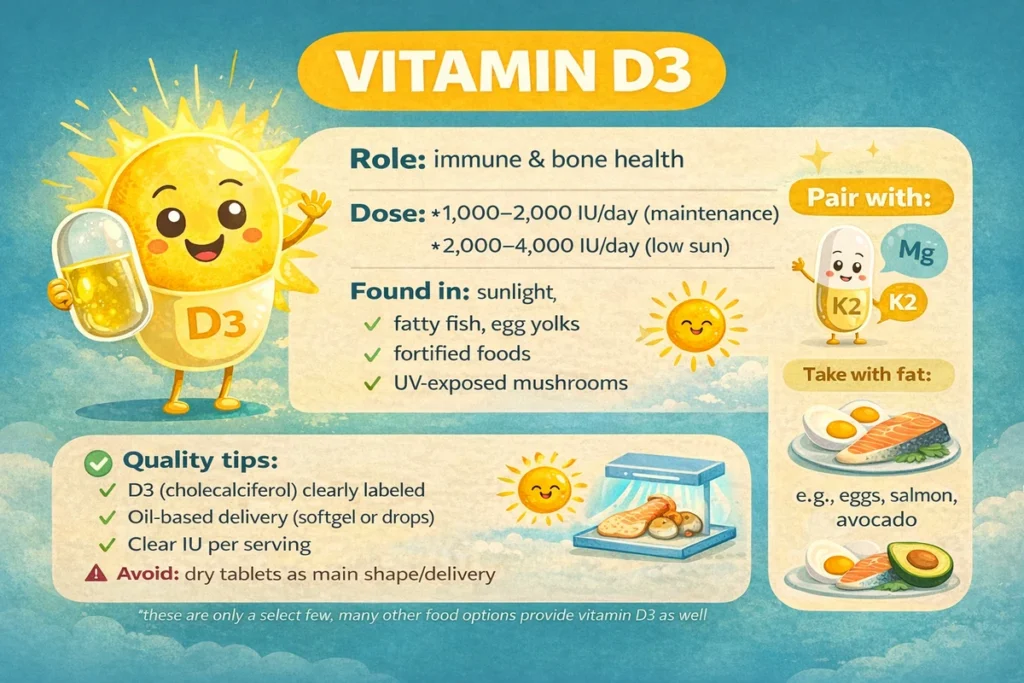
- Maintenance (most people): 1,000–2,000 IU/day
- Low sun / winter / likely low: 2,000–4,000 IU/day
- Higher doses: best only with labs + clinician guidance
How fast to reassess: retest after 8–12 weeks if you’re correcting a low level.
What to pair it with (this matters more than people think)
1) Magnesium (highly recommended)
You’re already using magnesium bisglycinate—great. Magnesium supports vitamin D metabolism, and low magnesium can make D supplementation feel “meh.”
2) K2 (optional, situation-dependent)
Some people like K2 (MK-7) alongside D3, especially if they’re taking D3 long-term.
Important caution: If you’re on blood thinners (especially warfarin), don’t add K2 unless your doctor approves.
When to take it (timing)
- Take D3 with a meal that contains fat (breakfast or lunch is perfect).
- If you notice it affects sleep/vivid dreams, move it earlier in the day.
What it can help with (women-focused)
Depending on what your body needs, D3 support can show up as:
- better immune resilience
- less “low-grade inflamed” feeling in winter
- improved energy/mood stability (especially seasonally)
- support for bone + muscle function
Quick “buying checklist” (quality)
A good D3 supplement should have:
- D3 (cholecalciferol) clearly labeled
- oil-based delivery (softgel or drops)
- minimal fillers
- reputable brand / ideally third-party tested
Safety notes (don’t skip)
Be extra cautious and get medical guidance if you have kidney disease, hyperparathyroidism, sarcoidosis/granulomatous disease, or a history of high calcium.
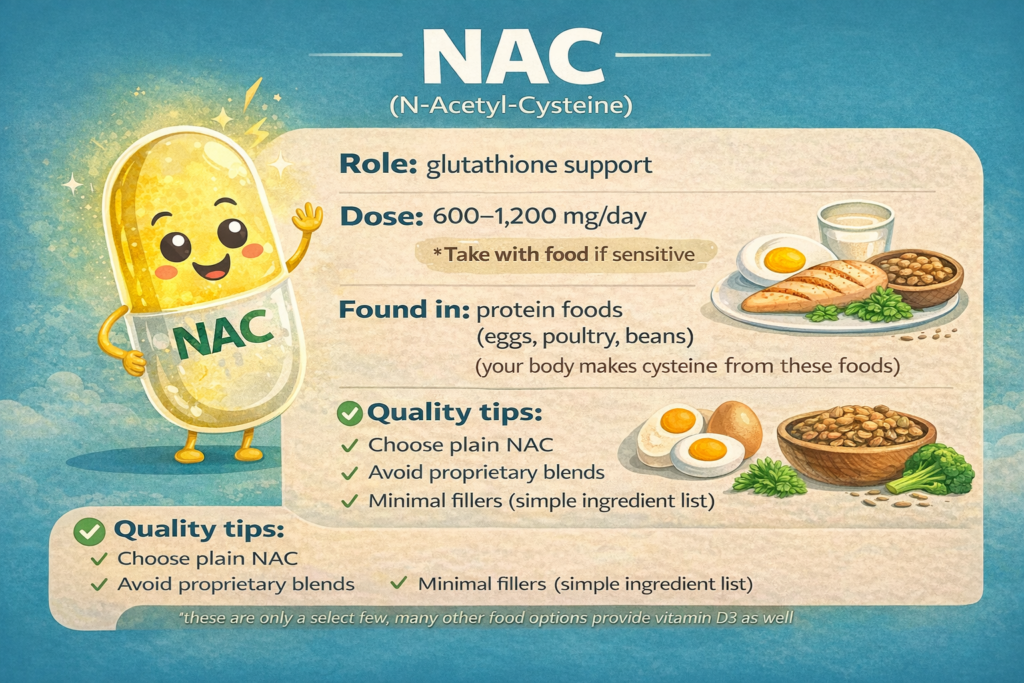
6. NAC: best dose, timing & who should avoid it
NAC is one of those supplements that can feel “quietly powerful” when it matches what your body needs. It’s not a stimulant and it’s not a hormone—but it supports a major anti-inflammatory pathway by helping your body make glutathione, one of your key internal antioxidants.
What NAC is actually good for (women-focused)
NAC is most useful when inflammation is closely tied to stress load, oxidative stress, and recovery. Women often reach for it when they’re dealing with:
- “wired but tired” periods (high stress + low recovery)
- dull skin/low resilience phases
- feeling more reactive to poor sleep, travel, or a busy schedule
- cycle-related “inflammation flares” (it’s not a direct PMS supplement, but some women notice better overall stability)
(And yes—some women also use NAC for specific hormone/skin goals, but the main win is supporting your antioxidant and detox pathways.)
Best form (what to buy)
Best choice: plain N-Acetyl-L-Cysteine (NAC) in capsules.
What to look for on the label
- “N-Acetyl-L-Cysteine” clearly listed
- 600 mg per capsule is a common, practical strength
- minimal fillers (simple ingredient list)
What to avoid (at least at first)
- “Proprietary blends” with NAC + lots of herbs (hard to troubleshoot)
- mega-formula detox blends (often under-dose NAC but add lots of extras)
Dose that makes sense (effective ranges)
A realistic NAC range for most adults:
- Start: 600 mg/day
- Common effective range: 600–1,200 mg/day
- If you’re sensitive: start 300–600 mg and build up
Best approach: start low and see how you feel for 1–2 weeks before increasing.
When to take NAC (timing + tolerance)
NAC timing is flexible, but these rules help:
- If your stomach is sensitive: take it with food
- If you tolerate it well: many take it between meals
- If you take 1,200 mg/day, split it: 600 mg AM + 600 mg PM
Hydration tip: NAC can feel “drying” for some—drink enough water.
Depending on your baseline, you may notice:
- better overall “resilience” (less crash after stress)
- clearer head / better recovery feeling
- subtle improvements in skin “dullness” tied to stress
- less of that “run down” feeling during busy weeks
Give it 2–4 weeks for a fair trial.
Quality checklist (because NAC quality varies)
- Choose reputable brands with transparent dosing
- Look for manufacturing quality signals (GMP, third-party testing if available)
- Skip products that hide dose amounts behind blends
Who should be careful / ask a professional first
NAC is generally well-tolerated, but be cautious if you:
- have asthma (some people react)
- take blood thinners or have a bleeding disorder
- use nitroglycerin (interaction risk)
- are pregnant / breastfeeding (get medical guidance)
Common side effects: nausea, reflux, headache (usually dose-related—lower the dose or take with food).
7. DIM: when it helps (and when it doesn’t)
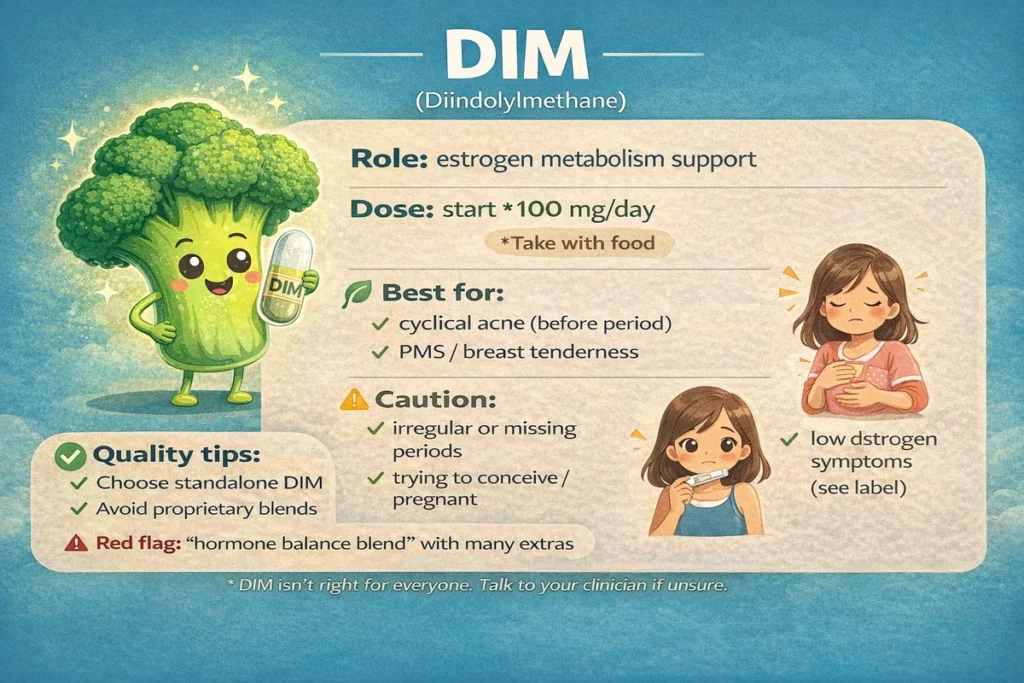
DIM is one of the most misunderstood “women’s supplements.” It can be incredibly helpful for the right person, and completely wrong for the wrong person—because DIM isn’t a general anti-inflammatory vitamin. It’s a targeted support for estrogen metabolism, which can indirectly calm inflammation-driven symptoms in some women.
Think of DIM as a “pattern-matching” supplement: it works best when your symptoms clearly fit, and you’re willing to start low and monitor your response.
What DIM actually does
DIM is a compound your body can make from cruciferous vegetables (like broccoli, kale, cabbage). It’s commonly used to support how estrogen is processed and broken down—especially the balance between different estrogen metabolites.
Why that matters: for some women, suboptimal estrogen metabolism is tied to:
- stronger PMS patterns
- breast tenderness
- cycle-related acne (chin/jawline)
- feeling “puffy,” moody, or inflamed in the luteal phase
DIM doesn’t “remove estrogen.” It supports pathways involved in how it’s metabolized—so the goal is better balance, not “lower is always better.”
Who DIM is usually best for (the “yes” signs)
DIM tends to be a good fit if you relate to several of these:
- cyclical acne that reliably flares before your period
- breast tenderness or heavy PMS symptoms
- you feel worse in the luteal phase (more swollen, moody, inflamed)
- you don’t eat many cruciferous veggies (or don’t tolerate them well)
If your cycles are regular and symptoms are clearly cyclical, DIM is easier to evaluate because you can track changes across 1–2 cycles.
When DIM can be a bad idea (the “no” signs)
Be cautious or skip DIM (at least without guidance) if you have:
- irregular or missing periods
- signs of low estrogen (very dry skin, low libido, hot flashes, cycles getting lighter/shorter)
- you’re trying to conceive, pregnant, or breastfeeding
- you’re very sensitive to hormone shifts (DIM can “move” things quickly for some)
Also: if you’re on hormonal birth control or hormone therapy, DIM may not be appropriate—talk to a clinician.
Best dose (what to start with)
DIM is not a “more is better” supplement.
Start low:
- 100 mg per day is a common starting dose
If you respond well and need more:
- some people use 150–200 mg/day, but I wouldn’t start there
How long to try it:
- give it one full cycle, ideally two, before judging the result
What to look for in a DIM supplement (quality checklist)
Best way to take it (timing + tolerance)
- Take DIM with food (it’s often easier on the stomach)
- Many women prefer taking it earlier in the day
- If you notice headaches or irritability, reduce the dose or stop and reassess
What improvements women often look for
If DIM is right for you, the “wins” often look like:
- fewer or less intense cycle-related breakouts
- less breast tenderness
- smoother luteal phase (less “inflamed” feeling)
- overall more stable PMS pattern
Quick takeaway
DIM is a powerful tool—but only when your symptoms fit the pattern. Start 100 mg/day, keep the formula simple, track across 1–2 cycles, and don’t force it if your body feels “off.”
8. Vitamin B6: P-5-P vs pyridoxine + safe dose
Vitamin B6 is one of those “small but mighty” nutrients—especially for women—because it’s involved in neurotransmitters, stress response, and hormone-related pathways. But B6 is also the supplement where people most often mess up, because form and dosing really matter.
This section will keep it practical: what to buy, how much, when to take it, and how to avoid the classic mistakes.
What B6 is most helpful for (women-focused)
B6 is often used to support:
- PMS mood + irritability (especially luteal-phase mood dips)
- stress resilience (because B6 is involved in neurotransmitter pathways)
- hormone-related symptoms (B6 participates in pathways connected to hormone regulation)
- general “run down” phases if your diet is low in B-vitamin-rich foods
Important: B6 isn’t a direct “anti-inflammatory pill,” but by supporting stress + nervous system balance, it can help reduce the downstream inflammation that flares when the body is overloaded.
Best form: P-5-P vs pyridoxine (this is the biggest upgrade)
You’ll usually see B6 in two forms:
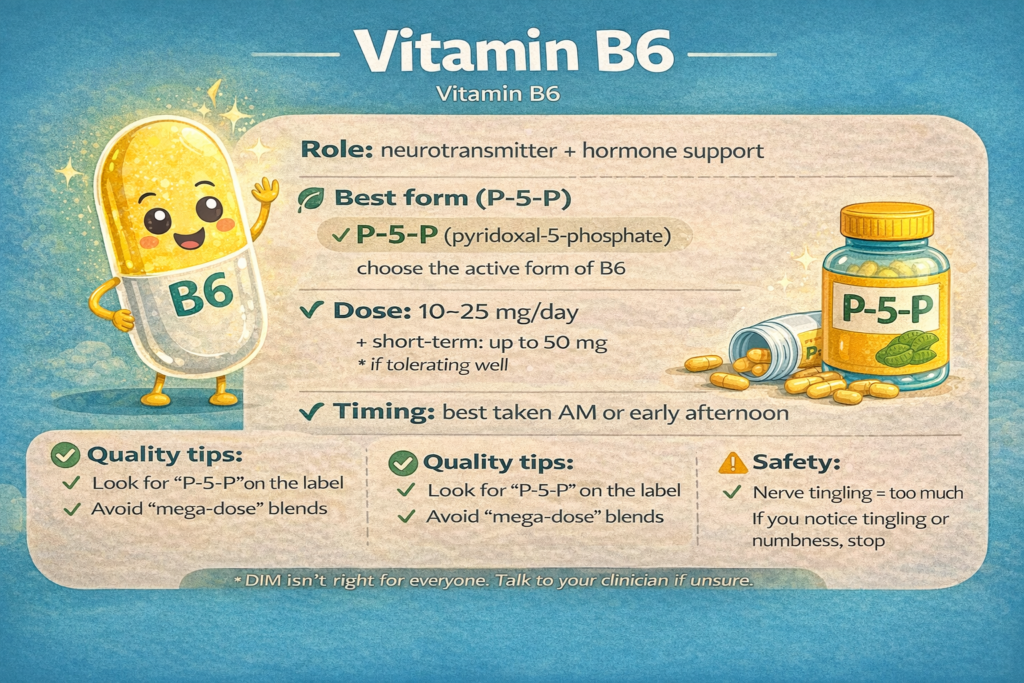
Best choice for many women: P-5-P (pyridoxal-5-phosphate)
This is the active form of B6. It’s often preferred because it’s ready for the body to use.
Other common form: pyridoxine HCl
This can work, but many women do better with P-5-P—especially if they’re sensitive or already taking multiple supplements.
Label tip: Look for “P-5-P” or “pyridoxal-5-phosphate” on the back, not just “Vitamin B6.”
Recommended amount (keep it conservative)
- Typical daily range: 10–25 mg/day (P-5-P)
- Short-term targeted range: up to 50 mg/day (only if you tolerate it well and you’re tracking symptoms)
If you’re already using a B-complex, check how much B6 you’re getting there so you don’t accidentally stack too high.
When to take it (timing)
- Best for most: morning or early afternoon
(B vitamins can feel energizing for some people.) - Take it with food if it upsets your stomach.
- If you’re using it for PMS, many women take it daily, but you can also trial it more intentionally during the luteal phase (after ovulation → period) if you prefer a targeted approach.
Quality checklist (how to buy well)
- Choose P-5-P when possible
- Avoid “mega-dose” B6 unless supervised
- Prefer brands that clearly list the exact mg per capsule (no blends)
Safety notes (important)
Stop and reassess if you notice:
- tingling, numbness, or unusual nerve sensations
These are red flags for too much B6 for your body.
Also: if you’re pregnant, breastfeeding, or on medications, keep dosing conservative and check with your clinician.
Supplements can be one part of a supportive wellness routine, but I also love simple daily habits that feel gentle and sustainable. If that speaks to you too, you might also enjoy my guide to anti-inflammatory teas for more soothing everyday ideas.
11. FAQ
How long does it take to see results from these supplements?
Some changes (sleep, stress resilience) can show up in 1–2 weeks (especially magnesium). For cycle-related goals (PMS, cyclical acne), give it 1–2 full cycles to judge fairly.
2) Can I take all of these at the same time?
You can, but it’s not the smartest way to start. Add one supplement at a time (every 7–14 days) so you know what’s helping—and what might be causing side effects.
3) What’s the best “starter stack” for most women?
A simple, high-ROI starting point is:
Omega-3 + magnesium bisglycinate + vitamin D3 (especially in winter/low sun).
Then consider NAC, DIM, or B6 only if your symptoms match.
4) How do I know if my omega-3 dose is high enough?
Don’t look at “fish oil mg.” Look at EPA + DHA combined on the label. Most women aiming for inflammation support do best at 1,500–2,000 mg EPA+DHA/day (split with meals).
5) Fishy burps—what can I do?
Try taking omega-3 with your biggest meal, splitting the dose, switching to a TG/rTG form, or freezing capsules. If it still happens, the product may be low quality/oxidized.
6) Should I take vitamin D3 every day?
For most people, daily dosing is the easiest and most stable approach. The ideal dose depends on your 25-OH vitamin D blood level, sun exposure, and season.
7) Do I need K2 with vitamin D3?
Not always. Many people do fine with D3 alone—especially if their diet includes vitamin K foods. If you use K2, be cautious if you take blood thinners (check with your clinician).
8) Can magnesium bisglycinate cause diarrhea?
It’s usually gentler than citrate, but any magnesium can cause GI issues at higher doses. Start low (100–150 mg elemental) and increase slowly. If constipation is your main goal, citrate may work better.
9) What’s the safest way to use NAC?
Start with 600 mg/day, take with food if you’re sensitive, and increase to 1,200 mg/day only if you tolerate it well. Choose plain NAC (avoid proprietary blends).
10) How do I know if DIM is right for me?
DIM is best for women with a clear cyclical pattern (PMS + breast tenderness + pre-period acne). Start low (100 mg/day) and track for 1–2 cycles. If your cycle is irregular or you have low-estrogen symptoms, be cautious.
11) What are the warning signs that B6 is too high?
Tingling, numbness, or unusual nerve sensations are red flags. Keep B6 conservative (10–25 mg/day, preferably P-5-P) and avoid long-term high doses unless supervised.
12) Can I take these while pregnant or trying to conceive?
Be extra cautious. DIM and higher-dose stacks are not DIY in this phase. If you’re TTC/pregnant/breastfeeding, get personal medical guidance before using hormone-adjacent supplements.
12. Final takeaways
If you take one thing from this guide, let it be this: supplements don’t work because of the name on the front label—they work because of the form, the effective dose, and the quality on the back label.
The quick recap
Magnesium bisglycinate is your best “foundation” for stress, sleep, and PMS tension. Aim for 200–350 mg elemental magnesium/day, preferably in the evening.
Omega-3 is one of the highest ROI anti-inflammatory tools—if you hit a real target: 1,500–2,000 mg EPA+DHA/dayand choose a tested product (freshness matters).
Vitamin D3 supports immune balance and low-grade inflammation, especially in low-sun seasons. Most women land in 1,000–4,000 IU/day depending on sun exposure and (ideally) blood levels.
NAC is a smart add-on when inflammation is tied to stress and oxidative load. Start with 600 mg/day, keep it simple (plain NAC), and adjust slowly.
DIM is not for everyone—use it only when your symptoms fit a clear cyclical pattern (PMS/breast tenderness/pre-period acne). Start at 100 mg/day and track for 1–2 cycles.
Vitamin B6 can help PMS mood/stress resilience, but keep it conservative. Prefer P-5-P, aim for 10–25 mg/day, and avoid long-term high doses.
My best “don’t waste money” rule
Start with the basics (omega-3 + magnesium + D3) and add only one targeted supplement at a time (NAC, DIM, or B6). That’s how you get results and know what actually helped.
If you want to go one step further, pair this supplement approach with an anti-inflammatory plate: protein + fiber + healthy fats at most meals—because that’s where long-term “glowing skin” results really come from.