
Morning & Night Skincare Routine: The Correct Order ( What to Use and When)
A good skincare routine isn’t about owning more products — it’s about using the right products in the right order.
If you’ve ever felt confused about when to apply toner, serum, or retinol, you’re not alone. Skincare can feel overwhelming, especially with so much conflicting advice online.
In this guide, you’ll learn a simple, realistic morning and night skincare routine that actually works. We’ll go step by step, explaining what to use, when to use it, and why the order matters — so you can build a routine that supports healthy, balanced skin.
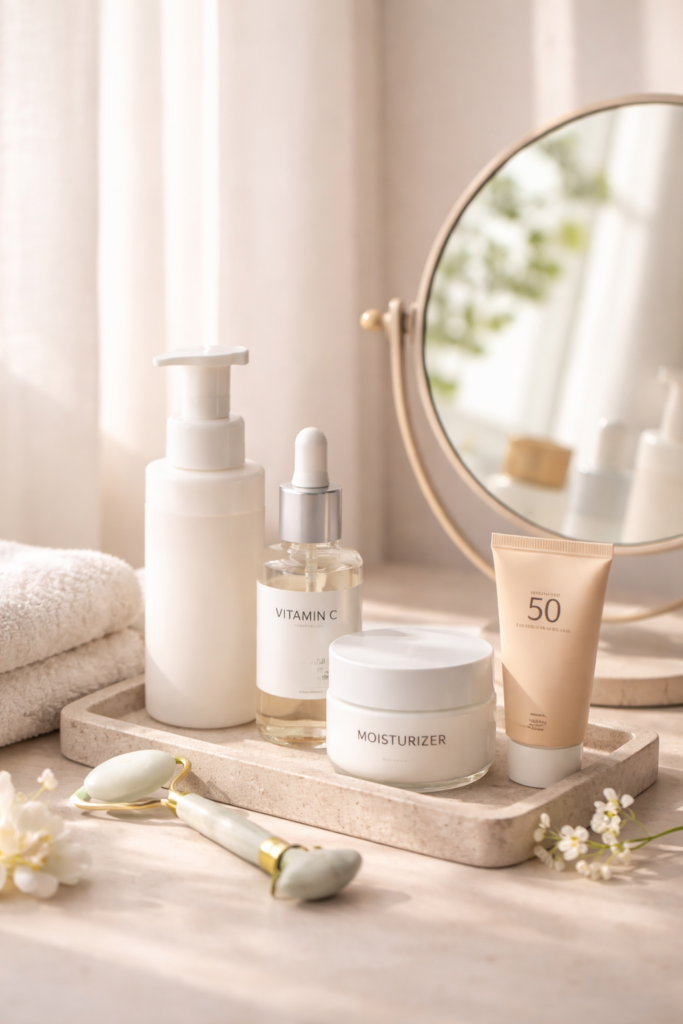
Morning Skincare Routine: Step-by-Step Guide
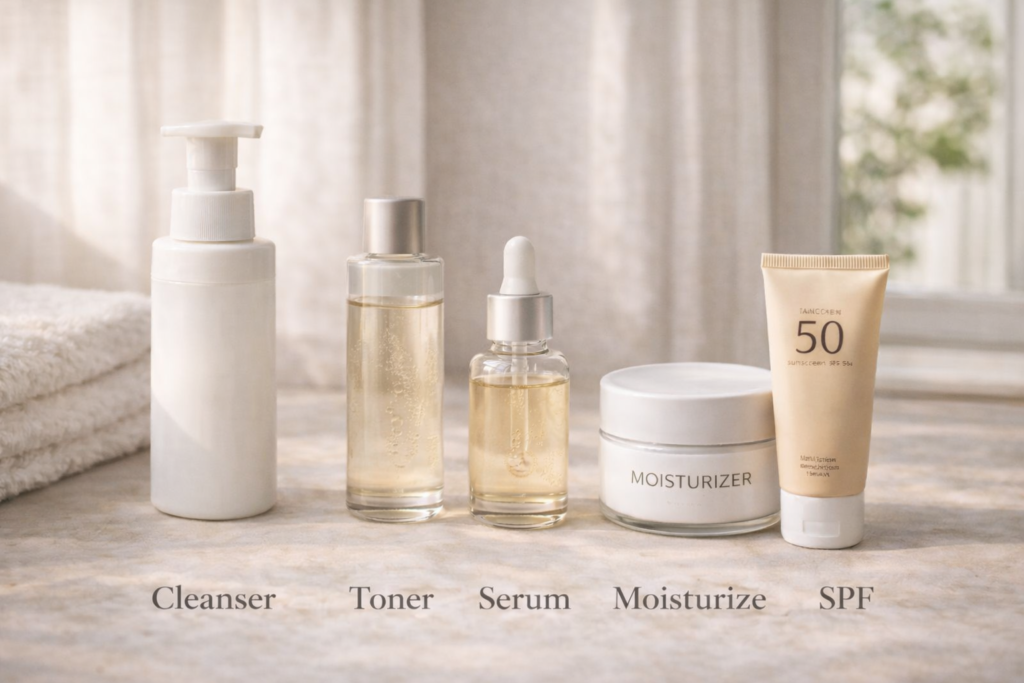
The goal of a morning skincare routine is simple: protect your skin, support hydration, and prevent damage throughout the day.
You don’t need many products in the morning. What matters most is using them in the correct order so each step can do its job effectively.
Step 1: Cleanser (or Gentle Rinse)
Cleansing in the morning removes excess oil, sweat, and residue from the night. This creates a clean base so your skincare products absorb evenly.
If your skin is dry or sensitive, a gentle cleanser — or even just a lukewarm water rinse — may be enough. The goal is to refresh the skin, not strip it.
Step 2: Toner or Essence (Optional)
A toner can add an extra layer of hydration and help calm the skin, but it is not a mandatory step.
If you enjoy using toner or have dehydrated skin, apply it after cleansing. If you prefer a minimal routine, you can safely skip this step.
Toner is optional, not essential.
Healthy skin comes from consistency — not from the number of products you use.
Step 3: Serum
Serums deliver concentrated ingredients that target specific skin concerns. In the morning, choose lightweight, protective, or hydrating formulas.
Common morning serums include:
- Vitamin C (antioxidant support and brightness)
- Hyaluronic acid (hydration)
- Niacinamide (barrier support and oil balance)
Stick to one serum, or two at most, to avoid overloading the skin.

Step 4: Moisturizer
Moisturizer helps seal in hydration and supports the skin barrier throughout the day.
In the morning, a lightweight moisturizer is usually enough. It should absorb well and sit comfortably under sunscreen and makeup.
Step 5: Sunscreen (SPF) — Always Last
Sunscreen is the most important step in your morning routine. It protects your skin from premature aging, pigmentation, and long-term damage.
Apply a broad-spectrum SPF 30 or higher as the final step. Use enough product to cover both the face and neck evenly.
If you only use one skincare product in the morning, let it be sunscreen.
Everything else works better when your skin is protected.
Once your morning routine is in place, your skin is protected and ready for the day.
Next, let’s look at the evening skincare routine — where cleansing, repair, and targeted treatments take center stage.
Night Skincare Routine: Cleanse, Treat, Restore

The evening skincare routine focuses on deep cleansing, skin repair, and recovery.
At night, your skin regenerates more actively, which makes this the ideal time for targeted treatments and barrier support. The key is to cleanse properly and keep the routine calm and intentional.
Step 1: First Cleanse (Oil Cleanser)
The first cleanse removes sunscreen, makeup, and oil-based impurities from the skin.
An oil cleanser or cleansing balm helps dissolve everything that water-based cleansers cannot remove on their own. This step is essential if you wore SPF during the day.
Step 2: Second Cleanse (Water-Based Cleanser)
The second cleanse removes remaining residue and actually cleans the skin.
Use a gentle, water-based cleanser to leave your skin clean but comfortable — never tight or stripped. This step completes the double cleansing process.
Step 3: Toner or Essence
A toner or essence can help hydrate and calm the skin after cleansing.
This step is optional, but it can be especially helpful if you use active ingredients or have dehydrated skin.
Toner is supportive, not essential.
Healthy skin comes from consistency, not extra steps.
Step 4: Hydrating or Barrier Serum
Evening serums should focus on hydration and barrier repair rather than stimulation.
Look for ingredients like hyaluronic acid, panthenol, ceramides, or centella. These help calm the skin and prepare it for treatments or overnight recovery.
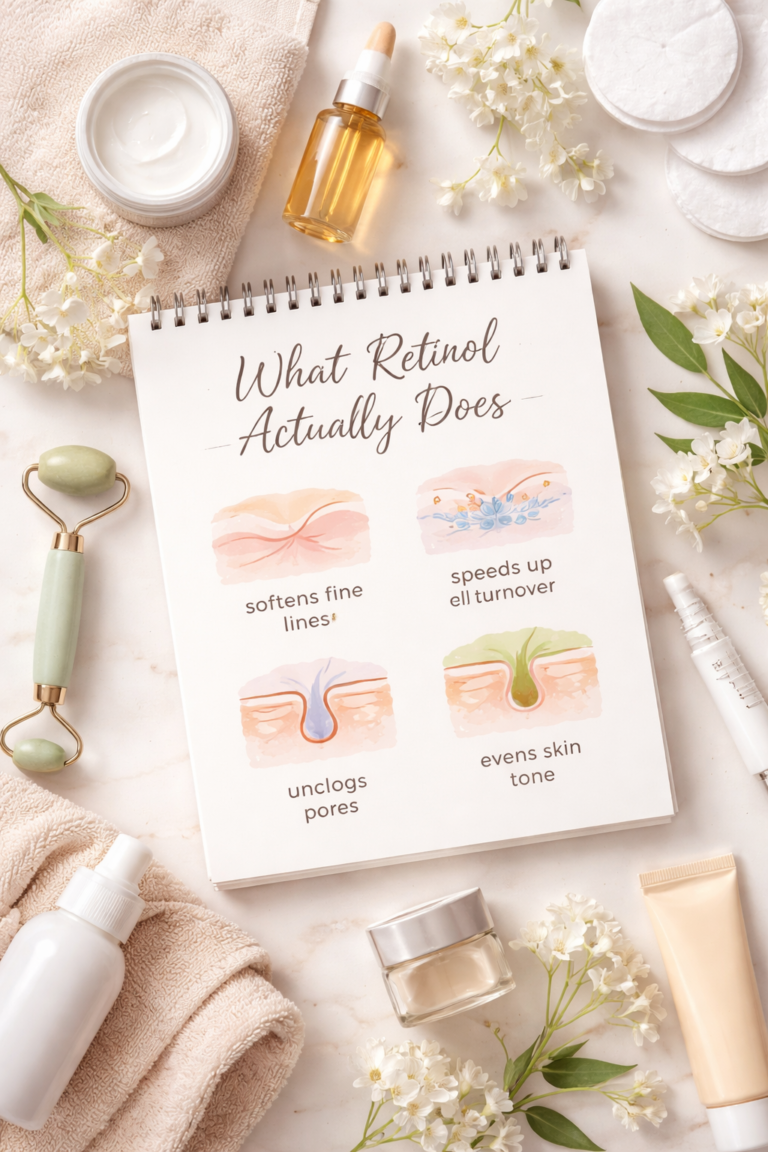
Step 5: Retinol or Active Treatment (2–3 Nights per Week)
Retinol and other active treatments should not be used every night.
Apply them only two to three times per week, on clean, dry skin. This helps improve skin texture and tone while minimizing irritation.
More is not better with retinol.
Slow, consistent use leads to better long-term results.
Step 6: Night Moisturizer
Finish your routine with a nourishing moisturizer to lock in hydration and support overnight repair.
Choose a texture that feels comfortable and soothing, especially on nights when you use active ingredients.
Once your evening routine is in place, your skin can focus on recovery while you rest.
Next, let’s look at common skincare mistakes and how to avoid them.
Skincare Routine FAQ
Skincare routines often raise questions, especially when it comes to product order, frequency, and active ingredients.
Below you’ll find clear answers to the most common skincare questions to help you feel confident and consistent with your routine.
How long should I wait between skincare steps?
In most cases, waiting 30 to 60 seconds between steps is enough.
Your skin should feel slightly absorbed but not completely dry before applying the next product. If your products start to pill, waiting a bit longer can help.
Do I really need both a morning and a night skincare routine?
Yes, because your skin has different needs during the day and at night.
The morning routine focuses on protection and prevention, while the evening routine supports cleansing, repair, and recovery. Even a simple version of both makes a difference.
Is toner necessary in a skincare routine?
No, toner is optional.
It can be helpful for hydration or calming the skin, but a skincare routine can still be effective without it. Consistency matters more than extra steps.
Can I use retinol every night?
Retinol should not be used every night, especially if you are new to it.
Most people benefit from using retinol two to three times per week. Using it too often can lead to irritation rather than better results.
What if my skin feels irritated or tight?
Irritation is a sign to slow down.
Pause active ingredients for a few days and focus on gentle cleansing, hydration, and barrier repair. Skincare should feel supportive, not uncomfortable.
How long does it take to see results from a skincare routine?
Hydration improvements can appear within days, while changes in texture, tone, or breakouts usually take four to eight weeks.
Consistency over time matters more than quick fixes.
Skincare is not about perfection.
Small, consistent steps will always outperform an overly complicated routine.
If your skincare routine still doesn’t feel quite right, you may be making one of these common skincare mistakes.
Final thoughts
Skincare does not need to be complicated to be effective.
A simple, consistent routine built around your skin’s needs will always bring better results than constantly switching products. Focus on gentle cleansing, proper hydration, and protection during the day, while allowing your skin to recover and repair at night.
Listen to your skin, move slowly with active ingredients, and remember that real progress comes from patience and consistency.
If you’re just starting out, begin with the basics and build your routine step by step.
You can save this guide for later or revisit it whenever you need a simple reminder of the correct skincare order.
Disclaimer:
The content on this blog is based on personal research and general skincare knowledge. I am not a medical professional, and this article does not provide medical advice.
For personalized recommendations or medical concerns, please consult a licensed healthcare provider or dermatologist.
Final Thoughts on Building a Skincare Routine
A well-designed skincare routine doesn’t need to be complicated to be effective.
By understanding the correct order of products and focusing on consistency rather than excess, you give your skin the space it needs to stay balanced, calm, and healthy. Gentle