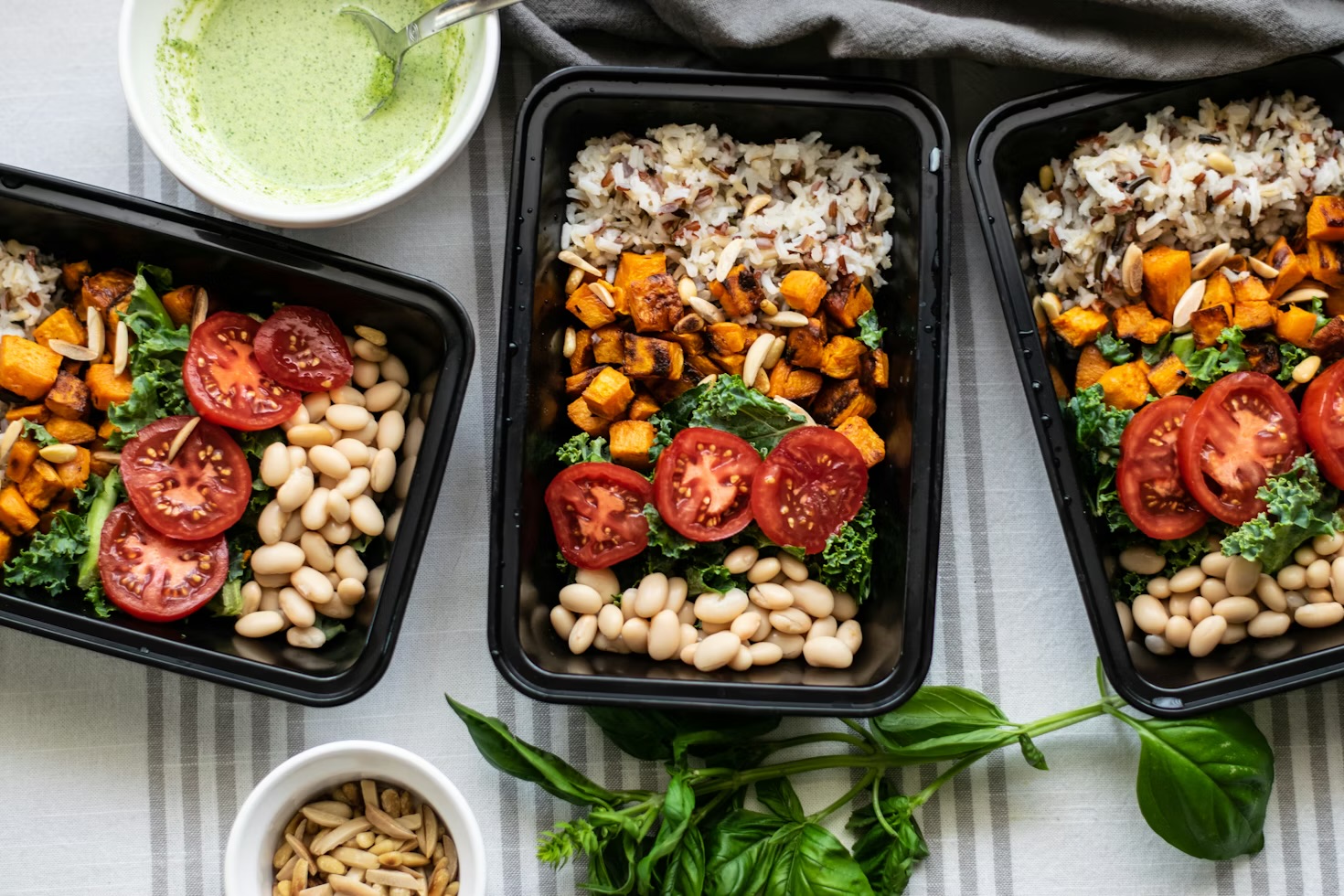
Meal Prep for Beginners: How to Start Simple and Eat Healthier
Meal prep for beginners can sound a little intimidating at first. For many people, it brings up images of a fridge full of identical containers, a long Sunday spent cooking, and a routine that feels more strict than helpful. But meal prep does not have to look like that at all.
If you are new to the idea, meal prep can be much simpler than that. It can mean cooking a few basics ahead of time, washing and chopping produce so it is ready to use, portioning snacks for busy days, or making two or three meals that take pressure off the rest of the week. At its core, meal prep is simply a way to make eating feel easier.
If you want to save time, reduce daily stress, make healthier choices more consistently, and stop wondering what to eat every day, meal prep is one of the most useful habits you can build. The key is to start small and make it fit your real life.
What Is Meal Prep, Really?
Meal prep is the practice of preparing food ahead of time so future meals are faster, easier, and less stressful. That can look different depending on your schedule, cooking style, and goals.
For some people, meal prep means making full lunches and dinners for several days. For others, it means roasting vegetables, cooking a pot of rice, baking chicken, washing berries, and calling it done. Both count.
That is what makes meal prep so helpful: it is flexible.
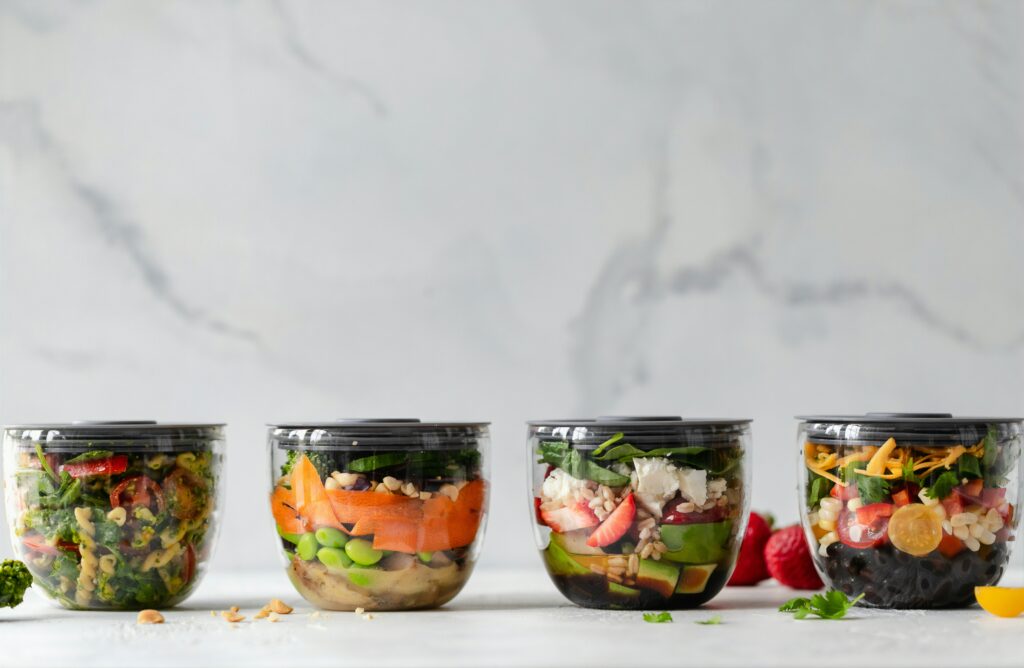
Here are a few common ways to approach it:
Full meal prep
You cook complete meals ahead of time and portion them into containers. This works well for grab-and-go lunches or busy workweeks.
Batch cooking
You make larger amounts of one or two basics, like rice, shredded chicken, turkey meatballs, or soup, and use them in different meals throughout the week.
Ingredient prep
You prepare components instead of full meals. Think chopped vegetables, washed greens, cooked grains, boiled eggs, sauces, or snack boxes.
Snack prep
You portion easy snacks ahead of time so healthier options are always ready when hunger hits.
If you are a beginner, ingredient prep is often the easiest place to start. It gives you structure without making you feel boxed in.
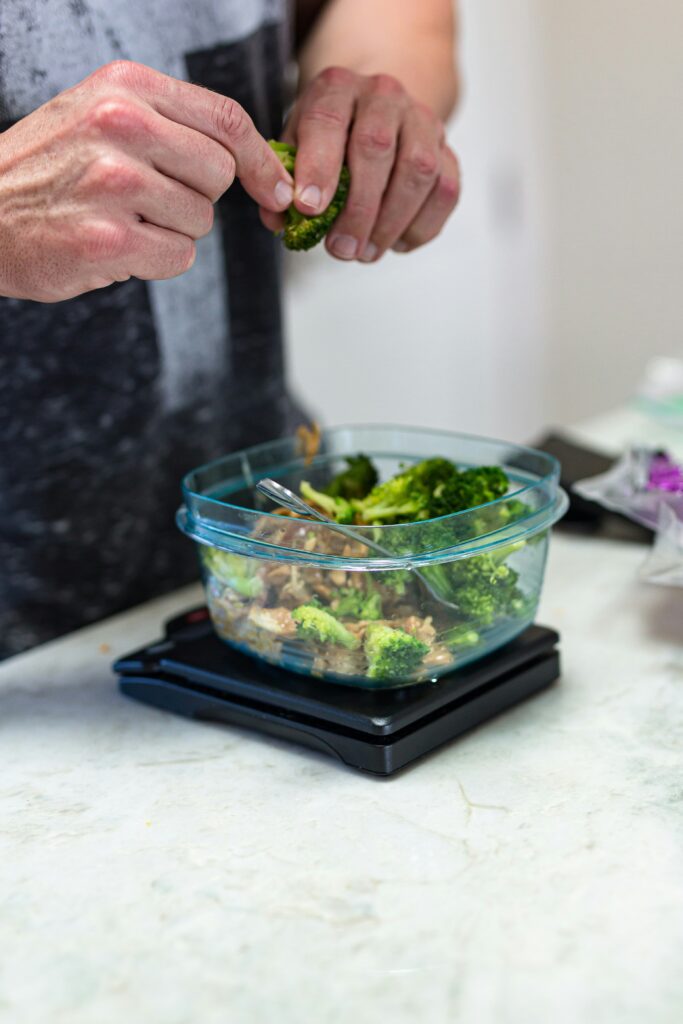
Why Meal Prep Is Worth Trying
Meal prep is not about being perfect. It is about making everyday life easier.
It saves time
Cooking once and using those ingredients multiple times can cut down on weekday decision-making, prep time, and cleanup. Even a small amount of prep can make weeknights feel much less chaotic.
It can help save money
When you plan ahead, you are more likely to use what you buy. That means fewer forgotten groceries, less takeout, and less waste.
It makes healthy choices easier
When meals and ingredients are already ready to go, it becomes much easier to eat in a way that feels balanced. You are not relying on last-minute choices when you are tired or hungry.
It reduces stress
One of the most underrated benefits of meal prep is mental relief. Not having to ask yourself what am I making tonight every evening can make a big difference.
It supports consistency
Healthy eating tends to feel easier when the basics are already in place. Meal prep helps bridge the gap between good intentions and real life.
It can help you stay on track with your goals
Meal prep is also one of the best tools if you are trying to stay consistent with calorie tracking, portion awareness, or higher protein eating. Having meals ready ahead of time can reduce last-minute decisions, make portions more predictable, and help you follow your plan more easily throughout the week.
Why Meal Prep Helps If You’re Tracking Calories
If you are trying to be more mindful of your portions or track your calorie intake, meal prep can make a huge difference. One of the biggest reasons people struggle to stay consistent is not lack of motivation. It is lack of preparation.
When meals are planned and portioned ahead of time, it becomes much easier to stay aligned with your goals. You are less likely to guess portion sizes, grab random snacks, or order something last minute because you are too hungry and tired to think clearly.
Meal prep can be especially helpful if you are trying to stay within a calorie goal, eat more protein, reduce mindless snacking, or create more structure during busy weeks.
It is not about making food feel restrictive. It is about making your choices easier. When you already have balanced meals ready to go, there is less stress, less guesswork, and a much better chance that you will stick to the plan you made for yourself.
Even simple prep can help with this. Prepping a protein, a carb source, vegetables, and a few snacks ahead of time gives you structure without making your routine feel rigid.
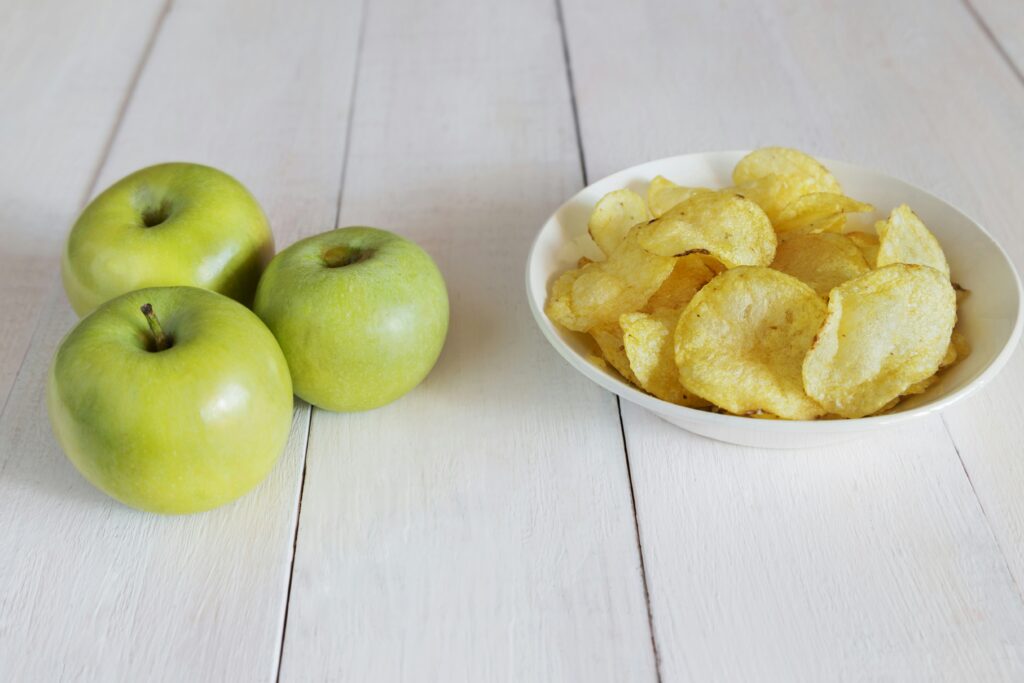
How to Start Meal Prep for Beginners
You do not need a perfect system to start meal prepping. In fact, the easiest way to make it stick is to keep it simple and realistic from the beginning. Meal prep should help your week feel easier, not create more pressure.
1. Start with just a few basics
Instead of trying to prep every single meal for seven days, start with just a few components. For example, prep one protein, one grain or starch, one or two vegetables, one breakfast option, and one easy snack. That is already enough to make your week feel much more organized without turning meal prep into an all-day project.
2. Choose foods you already enjoy eating
Meal prep only works if you actually want to eat what you made. Start with familiar meals and simple ingredients you already enjoy, such as grilled chicken, rice, roasted vegetables, overnight oats, hard-boiled eggs, yogurt bowls, or snack boxes. Beginner meal prep should feel approachable, not overly ambitious.
3. Keep your grocery list short and practical
One of the easiest ways to avoid overwhelm is to keep your grocery list simple. You do not need a long list of complicated recipes or specialty ingredients. A few proteins, carbs, vegetables, breakfast staples, and snacks are enough to create several easy meals.
4. Choose one prep day that fits your life
Many people like to meal prep on Sunday, but there is no perfect day. The best prep day is simply the one that works with your schedule. You can also split it up and do a small prep session twice a week instead of trying to do everything at once.
5. Make sure you have the right meal prep containers
Having the right containers makes meal prep much easier. You do not need a huge collection, but you do need containers that are practical, durable, and easy to store.
A good option is to choose glass meal prep containers with BPA-free lids. Glass is often preferred because it feels sturdier, does not stain as easily, does not hold onto odors the same way plastic can, and works well for reheating food. The lids should close tightly so meals stay fresh and are easy to stack in the fridge.
If you are just starting out, you do not need dozens of containers. A simple starter setup is usually enough.
A practical beginner set could include:
- 4 to 5 larger containers for lunches or dinners
- 3 to 4 smaller containers for breakfasts, snacks, fruit, yogurt, or chopped ingredients
- 2 to 3 very small containers for sauces, dressings, dips, nuts, or toppings
This usually gives you enough flexibility for a few prepared meals without overbuying.
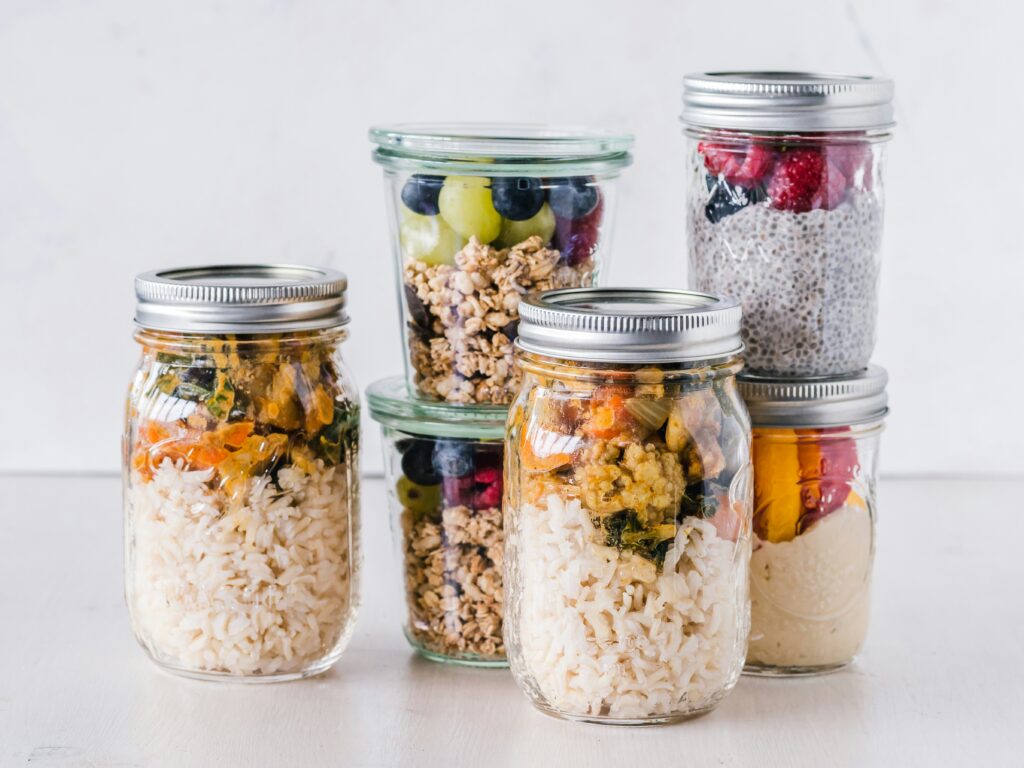
6. Use different container sizes for different meals
It helps to have a few different sizes instead of all one kind.
- Smaller containers are great for breakfast items like overnight oats, yogurt bowls, fruit, chia pudding, or snack portions.
- Larger containers work better for lunches and dinners, especially if you are storing full meals with protein, carbs, and vegetables.
- Mini containers are helpful for salad dressing, hummus, nut butter, salsa, seeds, or toppings that you want to keep separate until serving.
This makes your meal prep feel more organized and also helps with portioning.
7. Focus on containers that seal well
One of the most important things is that your containers are well-sealed and leak-resistant. This matters especially for salads, sauces, yogurt, or meals you want to take on the go. Containers that do not close properly quickly become frustrating, so it is worth choosing ones that feel secure and reliable.
8. Start small and build from there
You do not need a perfectly organized Pinterest-style fridge to meal prep successfully. Start with a few quality containers, prep just a handful of foods, and see what actually makes your week easier. Over time, you will figure out what sizes you use most and what kind of system works best for your lifestyle.
The goal is not to have the most containers or the most complicated routine. The goal is to make healthy eating easier, more realistic, and easier to maintain.
What Foods Are Best for Meal Prep?
Not every food holds up equally well, but many basics are great for prepping ahead.
Proteins
Protein is one of the most useful things to prep because it adds structure to meals and helps them feel more filling. Great options include grilled chicken, shredded chicken, baked salmon, turkey meatballs, ground turkey or beef, tofu, boiled eggs, and canned tuna or salmon.
Grains and starches
These are helpful building blocks for quick lunches and dinners. Good options include brown rice, white rice, quinoa, roasted potatoes, sweet potatoes, pasta, couscous, and tortillas.
Vegetables
Roasted or chopped vegetables make meals easier to assemble and add variety to your week. Try broccoli, carrots, zucchini, bell peppers, cauliflower, cucumbers, cherry tomatoes, spinach, or salad greens.
Breakfast basics
Breakfast is one of the easiest places to start meal prepping. Useful options include overnight oats, egg muffins, yogurt bowls, chia pudding, smoothie freezer packs, boiled eggs, and homemade breakfast burritos.
Snacks and grab-and-go items
Prepped snacks can help you stay fueled between meals and reduce mindless grabbing. Easy ideas include apple slices with nut butter, berries and yogurt, cheese and crackers, veggie sticks with hummus, trail mix, boiled eggs, and protein bites.
Sauces and flavor boosters
These matter more than people think. A simple sauce can help the same ingredients feel different throughout the week. Try tahini dressing, Greek yogurt ranch, pesto, salsa, hummus, peanut sauce, or lemon vinaigrette.
Essential Meal Prep Tools and Supplies
A few basics go a long way.
Containers
Start with a mix of sizes: larger containers for full meals, medium containers for ingredients, and smaller containers for sauces, dips, and snacks. Clear containers are especially helpful because they make it easier to see what you already have.
Sheet pans
Roasting a big batch of vegetables or protein on one or two sheet pans is one of the easiest ways to prep quickly.
Good knives and a cutting board
You do not need a full chef setup, but having one sharp knife and a sturdy cutting board makes prep much more efficient.
Pots, pans, and mixing bowls
A basic skillet, saucepan, baking dish, and a few bowls are enough for most beginner meal prep sessions.
Storage basics
Helpful extras include reusable zip bags, mason jars, labels or masking tape, a marker for dates, and measuring cups or a kitchen scale if you like more structure.
Easy Meal Prep Ideas for Beginners
Breakfast meal prep ideas
Overnight oats are one of the easiest options because you can make a few jars at once with oats, milk, yogurt, chia seeds, and fruit. Egg muffins are another simple choice. Just whisk eggs with spinach, peppers, cheese, or turkey, then bake in a muffin pan. Yogurt parfait boxes and smoothie prep packs also work well for busy mornings.
The best healthy breakfast ingredients
Lunch meal prep ideas
Grain bowls are one of the easiest meal prep formulas to repeat. Use a base like rice or quinoa, add protein, roasted vegetables, and a sauce. Wraps and roll-ups also work well if you prep the fillings ahead of time. Pasta salad and mason jar salads are both practical options for a few days of easy lunches.
Dinner meal prep ideas
Sheet pan meals are perfect for beginners because they keep things simple. Roast chicken or salmon with vegetables and potatoes for a dinner base you can mix and match. Taco bowls are another easy idea, especially when you prep seasoned ground turkey, rice, shredded lettuce, salsa, beans, and toppings ahead of time. Soup, chili, and stir-fry components are also great for making dinner faster during the week.
Snack meal prep ideas
Snack boxes can be filled with fruit, cheese, nuts, crackers, boiled eggs, or sliced vegetables. Washed fruit is another small but powerful step, because once grapes or berries are clean and ready, they are far more likely to get eaten. You can also prep veggie sticks with hummus or make oat-based energy bites for a quick grab-and-go option.
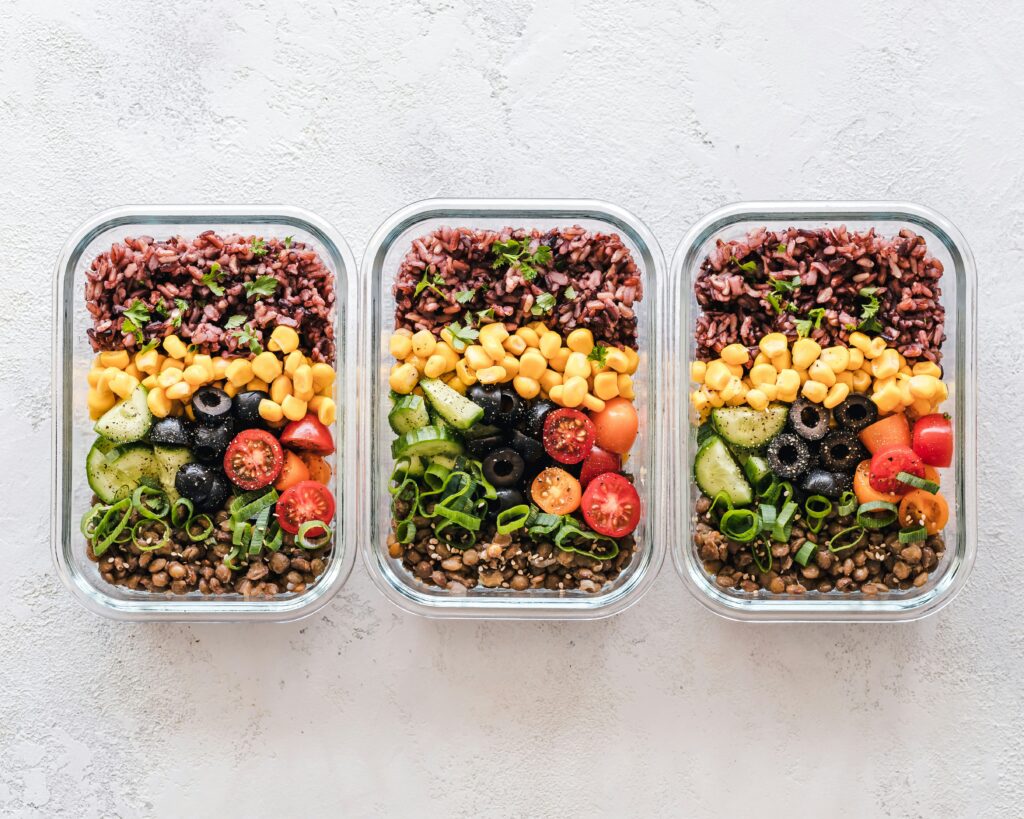
Common Meal Prep Mistakes to Avoid
Doing too much too soon
Trying to prep every breakfast, lunch, dinner, and snack for seven days can feel exhausting fast. Start smaller than you think you need to.
Choosing complicated recipes
This is not the week to try five new meals with long ingredient lists. Simplicity builds consistency.
Prepping foods you do not actually crave
Healthy food still needs to sound good to you. If a meal feels boring by day two, you probably will not keep repeating it.
Ignoring texture and freshness
Some foods hold up better than others. Delicate greens, sliced avocado, crispy roasted foods, and certain sandwiches are usually best assembled closer to when you eat them.
Leaving no room for flexibility
A realistic meal prep routine should support your week, not control it. It is okay to prep a few basics and still leave space for spontaneous meals or leftovers.
How to Make Meal Prep Realistic and Sustainable
Build simple formulas
Instead of relying on detailed recipes every week, use a flexible formula. For lunch or dinner, think protein plus grain or starch plus vegetables plus sauce. For breakfast, think protein plus fiber plus healthy fat. For snacks, think protein or fat plus fruit or a fiber-rich carb.
Repeat when it helps
You do not need endless variety to eat well. Repeating a few breakfasts or lunches during the week can actually make life easier.
Prep for your hardest moments
Think about when your routine usually falls apart. Is breakfast rushed? Do afternoons make you snacky? Is dinner the most stressful part of your day? Start by prepping for the moment that feels hardest.
Adjust every week
Some weeks you may prep a lot. Other weeks you may only wash produce and make overnight oats. That is still progress. Meal prep works best when it supports your real life, not an idealized version of it.
Best Meal Prep Ingredients That Hold Up Well
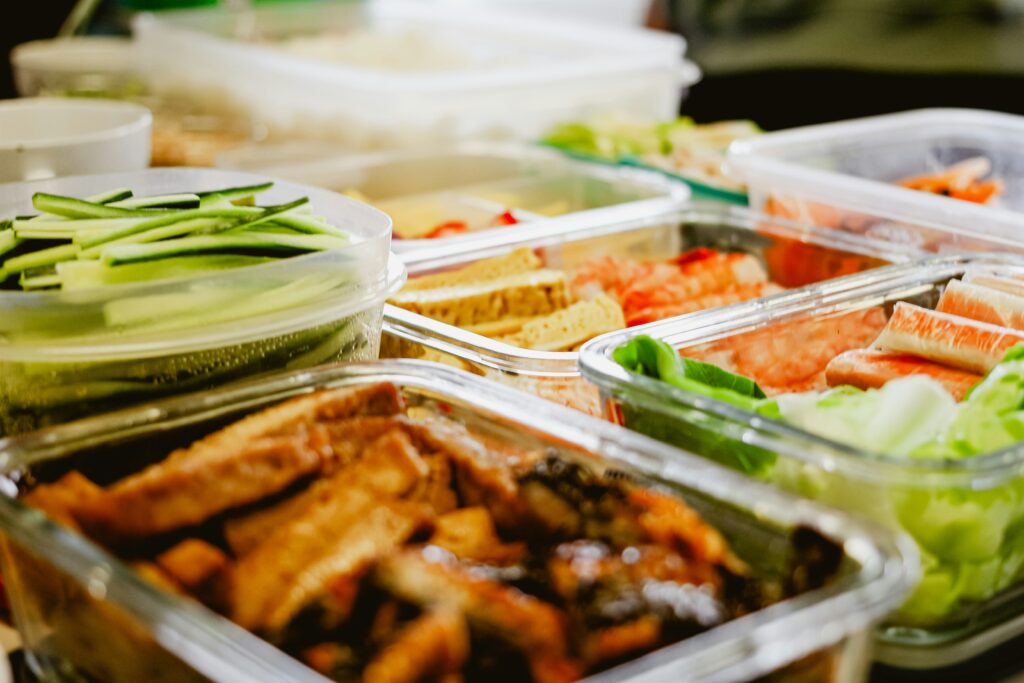
One of the biggest keys to successful meal prep is choosing ingredients that store well, keep a good texture, and still taste good a few days later. Not every food is ideal for prepping ahead, so it helps to focus on ingredients that are practical, versatile, and easy to mix into different meals.
Below are some of the best meal prep ingredients for breakfast, lunch, dinner, and snacks. These are all good options because they generally hold up well in the fridge, work in multiple recipes, and make weekly prep much easier.
Best Meal Prep Ingredients for Breakfast
These breakfast ingredients are easy to prepare ahead of time and usually keep their texture and flavor well for several days.
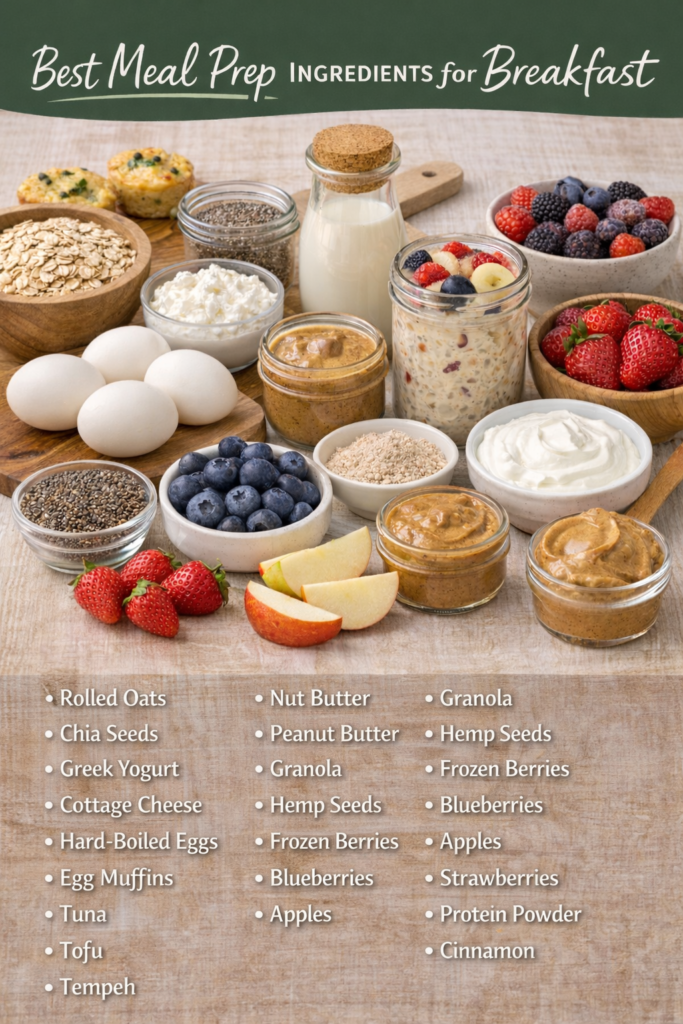
These ingredients work especially well for overnight oats, yogurt bowls, breakfast jars, egg-based meal prep, smoothie packs, and protein-focused breakfasts.
Best Meal Prep Ingredients for Lunch
Lunch meal prep works best with ingredients that stay fresh, reheat well, and can be combined in different ways without getting soggy too quickly.
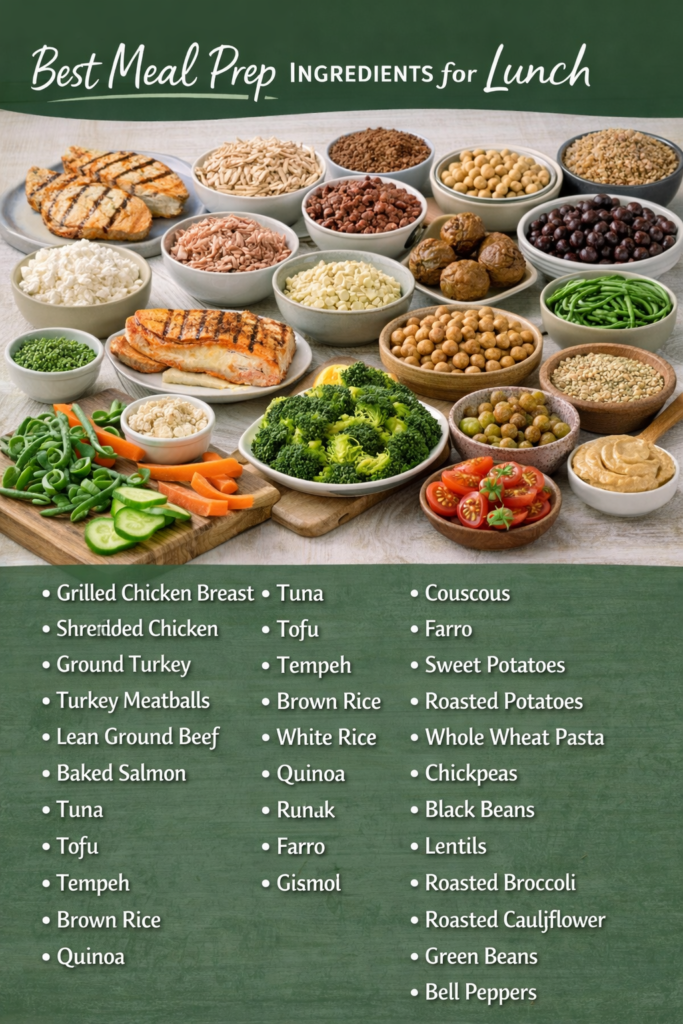
These ingredients are great for grain bowls, wraps, pasta salads, lunch boxes, protein bowls, and simple mix-and-match containers.
Best Meal Prep Ingredients for Dinner
Dinner meal prep ingredients should be satisfying, flexible, and easy to reheat while still keeping a good texture.
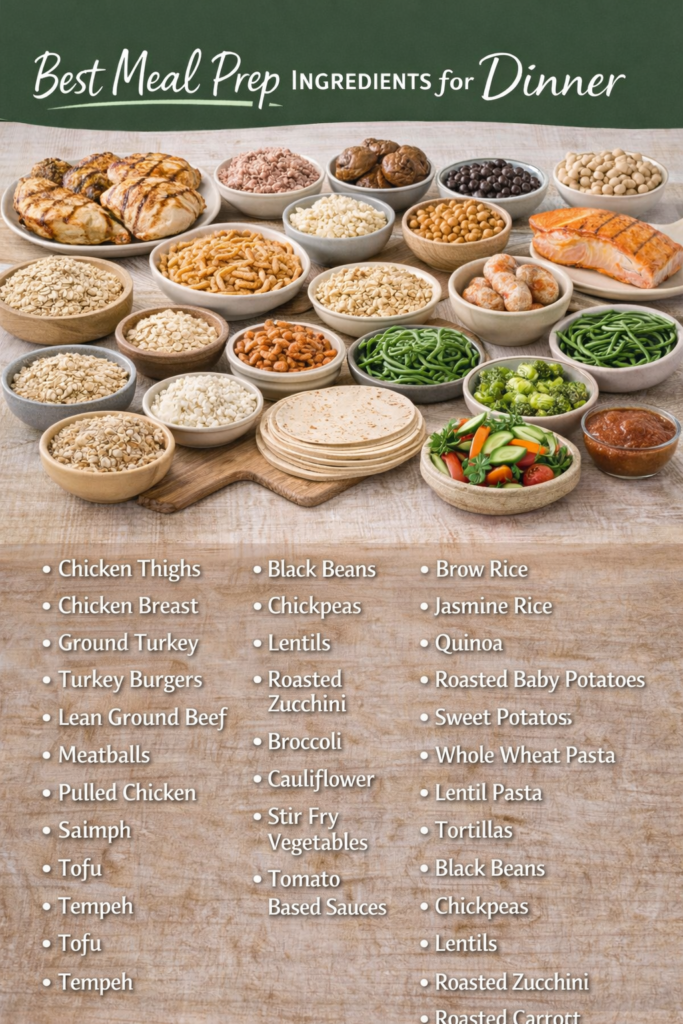
These work well for sheet pan meals, taco bowls, pasta dishes, stir-fries, protein plates, and simple weeknight dinners that come together quickly.
Best Meal Prep Ingredients for Snacks
The best meal prep snacks are easy to portion, hold up well in the fridge or pantry, and are convenient for busy days.
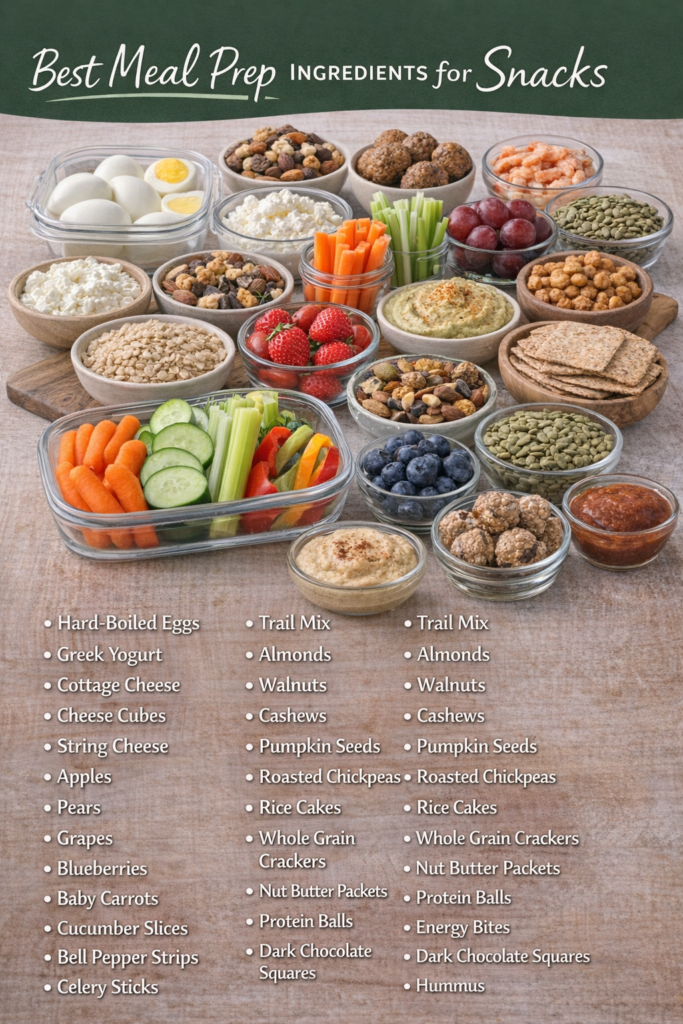
These make snack boxes, grab-and-go portions, and balanced mini meals much easier to prepare in advance.
Meal Prep Ingredients That Usually Hold Up Best
In general, the most reliable meal prep ingredients are cooked grains, roasted vegetables, sturdy fruits, proteins, boiled eggs, beans, yogurt-based items, nuts, seeds, and sauces stored separately. These tend to keep their texture well and stay usable for several days.
Some of the easiest meal prep staples to build around are:
- rice
- quinoa
- oats
- chicken
- turkey
- eggs
- Greek yogurt
- sweet potatoes
- broccoli
- carrots
- cucumbers
- hummus
- beans
- berries
- apples
- nut butter
- chia seeds
- roasted vegetables
- pasta
- simple dressings
Ingredients That Are Better Added Fresh
Some foods do not hold up as well during meal prep and are usually better added right before eating.
These include:
- avocado
- bananas in sliced form
- delicate berries for long storage
- crispy fried foods
- heavily dressed salads
- watery vegetables if cut too early
- soft herbs in large amounts
- toasted toppings
- crunchy granola if mixed in too early
- anything that becomes soggy quickly
A simple rule is this: prep the sturdy basics ahead of time, and add delicate or crunchy ingredients fresh when possible.
Final Thoughts on Meal Prep for Beginners
Meal prep does not need to be all or nothing. You do not need a color-coded fridge, a stack of matching containers, or an entire Sunday devoted to cooking to make it work.
If you are just getting started, focus on making one part of your week easier. Prep a breakfast you can grab, cook a protein you can use a few ways, roast a tray of vegetables, or portion a few snacks. Those small steps can save time, reduce stress, and make healthy eating feel much more doable.
The goal is not to become perfect at meal prep. The goal is to create a routine that helps you feel more prepared, more nourished, and less overwhelmed during the week.
Start simple, keep it practical, and let your system grow from there.
FAQ
What is the best way to start meal prep for beginners?
The best way to start meal prep for beginners is to keep it simple. Prep just a few basics like one protein, one grain, some vegetables, and one breakfast or snack option. Starting small makes the habit feel much more manageable and easier to maintain.
What foods are best for beginner meal prep?
The best foods for beginner meal prep are foods that store well and can be used in different meals. Good options include rice, quinoa, roasted vegetables, chicken, boiled eggs, overnight oats, yogurt, chopped fruit, and simple sauces.
How long does meal prep last in the fridge?
Most meal prep meals and ingredients last around 3 to 4 days in the fridge, depending on the food. Some items, like sauces, hard-boiled eggs, and certain grains, may last a little longer. It is helpful to label containers with the prep date.
Does meal prep mean cooking every meal ahead of time?
No. Meal prep does not have to mean cooking every meal in advance. It can also mean preparing ingredients ahead of time, such as washed produce, cooked grains, roasted vegetables, proteins, or snack boxes to make meals faster during the week.
What do I need to start meal prepping?
To start meal prepping, you only need a few basics: simple containers, a cutting board, a knife, sheet pans or pots, and a short grocery list with foods you actually enjoy eating. A realistic plan matters more than having a lot of tools.
You May Also Enjoy
If you are working on making healthy eating feel easier and more realistic, these posts may be helpful too. From simple breakfast ideas to nourishing recipes and sustainable wellness habits, they can give you even more inspiration for building a routine that works in real life.
- High-Protein Vanilla Overnight Oats Recipe with Chocolate Shell
A simple make-ahead breakfast idea for busy mornings. - The Best Ingredients for a Healthy Breakfast
Easy breakfast staples to keep on hand for balanced meals. - 10 Lazy Girl Wellness Habits That May Support Weight Loss
Realistic healthy habits that can make consistency feel easier. - Anti-Inflammatory Pumpkin Soup
A cozy make-ahead meal that works well for lunch or dinner. - Natural Healing Power Sources: 6 Outstanding Anti-Inflammatory and Hormone-Supporting Teas
Simple wellness drinks to add to your routine. - Easy Sourdough Discard English Muffins Recipe
A homemade breakfast option that can fit into meal prep. - Sourdough Discard Tortillas
A versatile base for wraps, lunch boxes, and easy meals.